1.Order of the lights and the solid red light
- Traffic control signals use green, yellow and red lights at intersections or where roadways merge. The colour you face decides whether your stream of traffic has the right-of-way.
- On a vertical signal, red is at the top, yellow in the centre and green at the bottom. On a horizontal signal, red is on the left, yellow in the centre and green on the right.
- At a solid red light, come to a complete stop before the stop line or crosswalk directly in front of you; if there is neither, stop before the intersection. Stay stopped until the light turns green.
- A solid double red light means exactly the same as a single red light.
- You may turn right on a red light unless a sign prohibits it — but only after a complete stop before the stop line or crosswalk, and only when it is safe, yielding to all other traffic.
- The only left turn allowed on a red light is from a one-way street onto another one-way street, unless a sign prohibits it. You must first stop completely before the stop line or crosswalk and yield to other traffic.
Signs in this section
Official source: Traffic control ↗
2.Solid yellow and solid green lights
- When a green light turns yellow, it is warning you that red comes next, right away: get ready to stop or to clear the intersection.
- Approaching a solid yellow light, stop completely before the stop line or crosswalk (or before the intersection if there is neither) — unless you are so close that you can no longer stop safely.
- If you are already in the intersection when the light turns yellow, clear the intersection safely.
- A solid green light lets you go through without stopping, but when turning left you must yield to oncoming traffic, and when turning left or right you must yield to pedestrians in the crosswalk.
- A "stale" green light has been green for a while and will soon turn yellow, so expect the change as you approach.
- A good clue is the pedestrian signal: if it shows WALK, the green will stay; if it shows DON'T WALK, be ready to stop. If the light does change, stop before the intersection if you can do so safely.
Signs in this section
Official source: Traffic control ↗
3.Flashing lights and green arrows
- A flashing yellow light lets you go ahead with caution after yielding to pedestrians and other vehicles in the intersection.
- A flashing red light is treated like a stop sign: stop before the stop line, the crosswalk or the intersection, then go only when it is safe and you have yielded the right-of-way.
- When the lights in every direction are flashing red, the intersection becomes a four-way stop.
- A flashing green light lets you go straight, turn left or turn right without stopping, because opposing traffic faces a red light. You must still yield to pedestrians and to vehicles lawfully in the intersection.
- A green arrow shown with a solid green light lets you go in the direction of the arrow without yielding; you may also go in the other directions when it is safe and legal.
- A green arrow shown with a red light lets you go without stopping, but only in the direction of the arrow.
- A warning sign with flashing yellow lights is placed before some signalled intersections. When its lights flash, prepare to stop: the signal ahead is changing to yellow or red, or is already red.
Signs in this section
Official source: Traffic control ↗
4.Pedestrian signals and pedestrian crossings
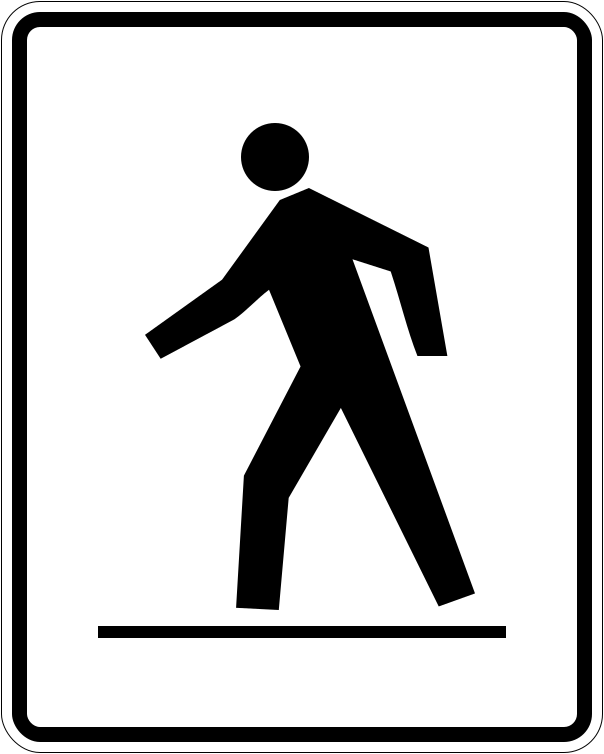
- Drivers need to know the pedestrian signals too, so they can anticipate what people on foot will do. A WALK word or symbol lets a pedestrian enter the crosswalk when it is safe.
- At DON'T WALK (or WAIT), a pedestrian must not start to cross — but anyone who was already crossing may keep going and clear the crosswalk.
- Some pedestrian signals have a countdown timer showing how much time is left before the light changes.
- Where there are traffic lights but no pedestrian signals, pedestrians follow the light they face: red means do not enter, yellow means clear the road or do not enter, and green means cross within any marked or unmarked crosswalk.
- Yellow lights on a school, playground or pedestrian crossing sign call for caution. When they are flashing, slow to a maximum of 30 km/h and yield or stop for pedestrians.
- A pedestrian-activated crossing with flashing yellow lights works the same way: slow to 30 km/h and yield to pedestrians who want to cross.
Signs in this section


Official source: Traffic control ↗ · Sharing the road ↗
5.Lane reversal signals
- Lane reversal signals control the direction of traffic in particular lanes. They are commonly used on reversible lanes whose direction changes at different times of the day.
- The signal above each lane switches between a red X and a green arrow.
- A red X over a lane means do not drive in it or stay in it: oncoming traffic is using that lane.
- If you find yourself under a red X, move safely into a lane showing a green arrow.
- A green arrow pointing down over a lane means you may travel in that lane.
Signs in this section
Official source: Traffic control ↗
6.Yellow and white lane lines
- Lane lines can be yellow or white, single or double, solid or broken. They tell you the direction of traffic flow and whether you may change lanes or pass.
- Yellow lines separate traffic moving in opposite directions. A yellow line should always be on the driver's left.
- White lines separate traffic moving in the same direction.
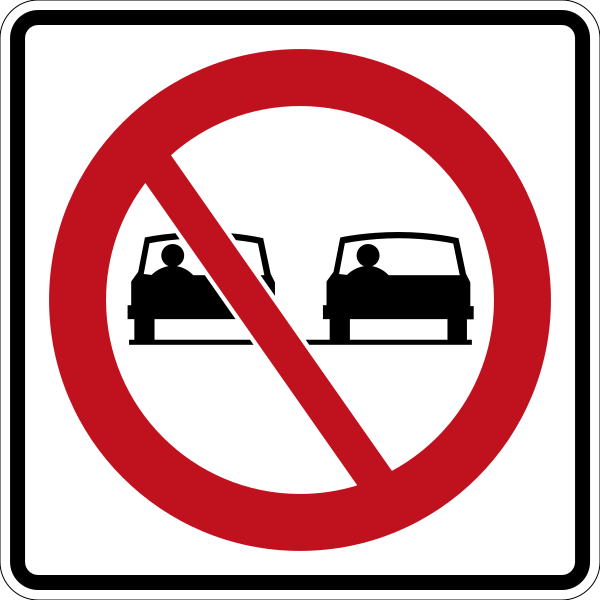
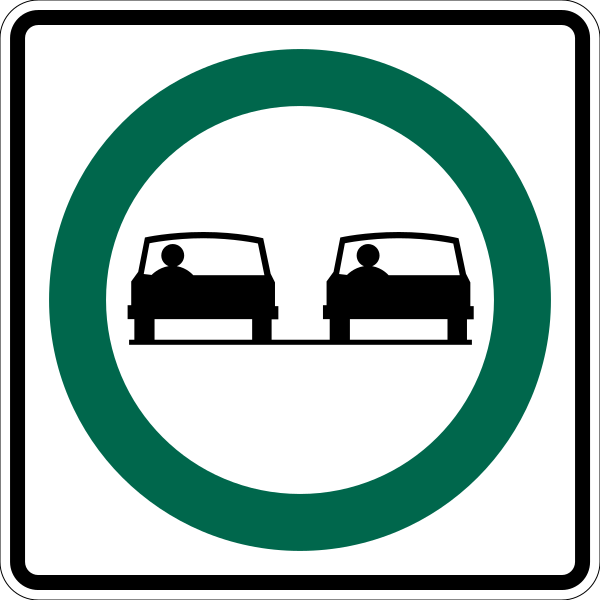
- As a rule, you may not cross a solid line to pass or change lanes; you may cross a broken line.
- Alberta exception: inside an urban area you may pass safely across a single solid yellow line. Everywhere else, a single or double solid yellow line means no passing.
| Marking | What it means |
|---|---|
| Broken yellow line | Passing is permitted — make sure the lane is clear and the pass can be finished safely |
| Solid yellow beside broken yellow | Only the driver with the broken line on their side may pass |
| Single solid yellow line | Passing safely is allowed inside an urban area; outside one, no passing |
| Double solid yellow lines | No passing |
| Solid white line | Lane changing is not permitted |
| Broken white line | Lane changing is permitted |
Signs in this section
Official source: Traffic control ↗
7.Arrows, special lanes and painted areas
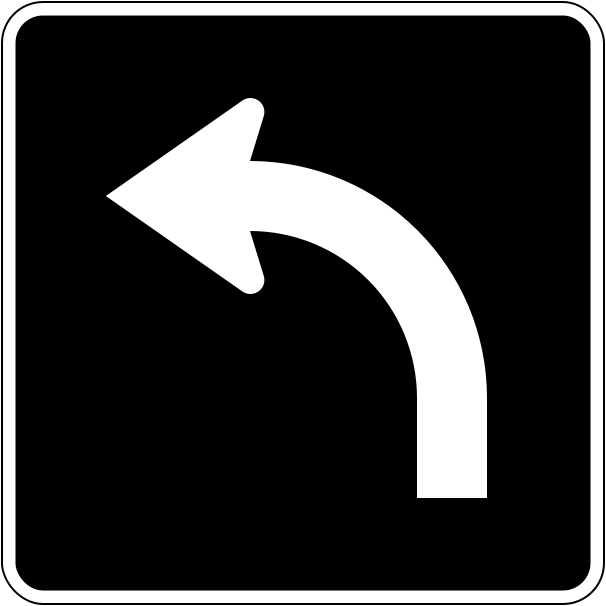
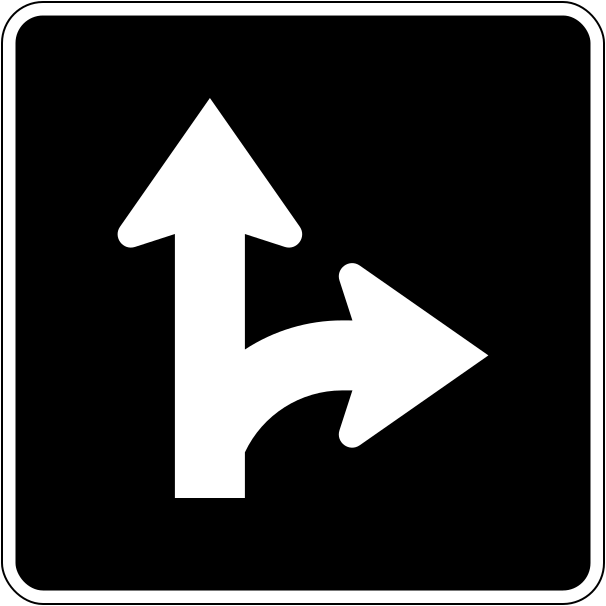
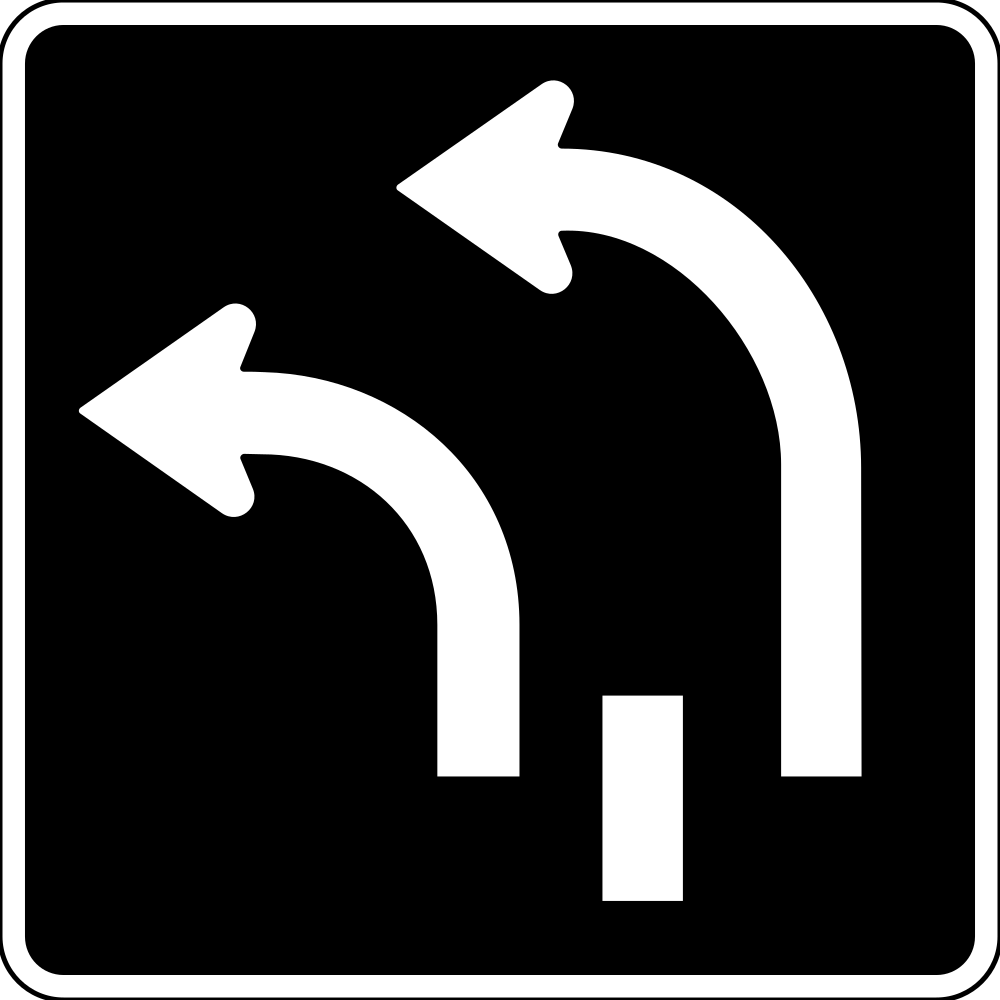
- Arrows painted in a lane show which movements are allowed from that lane. Designated lane signs above or beside the road give the same message.
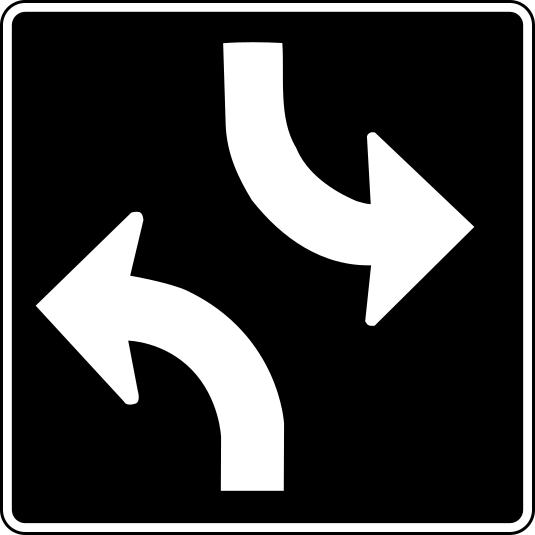
- A two-way left turn lane is a centre lane shared by left-turning traffic from both directions.
- You may cross the solid yellow line to enter a two-way left turn lane, but enter it only close to where you will turn, and watch for oncoming vehicles in it.
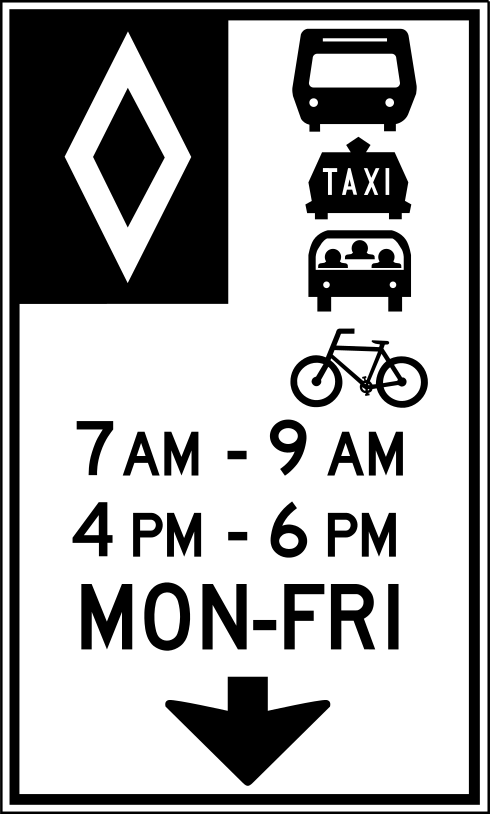
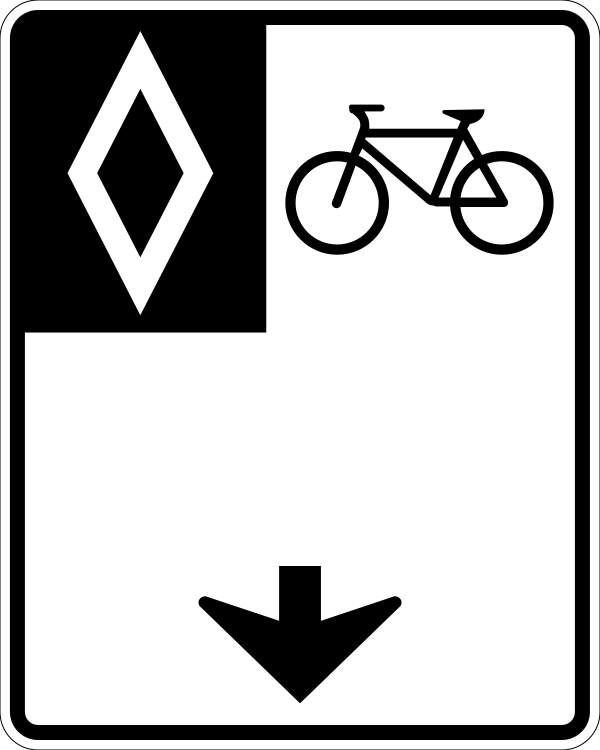
- Diamond markings mean the lane is reserved for certain vehicles; signs may show the times or the vehicles allowed.
- Reserved lanes may be for buses, taxis or bicycles. Some are reserved all the time; a part-time reserved lane shows the hours and days it applies.
- A painted island is not for travel by anyone. You may cross it only to enter or leave a driveway, alley or private drive.
- Do not stop in a marked no stopping zone: it is usually where large vehicles need extra room to turn from one road onto another.
Signs in this section
Official source: Traffic control ↗ · Intersections and turns ↗
8.Bicycle lanes, shared-use lanes, crosswalks and stop lines
- A bicycle lane is reserved for cyclists. It is separated from traffic and parking by solid white lines and marked with a bicycle and a diamond.
- You may not drive in a bicycle lane except to turn or to get into or out of a parking spot.
- Near corners the bicycle lane line is usually dashed, showing that you may enter the lane to turn right. Watch carefully for bicycles when you do.
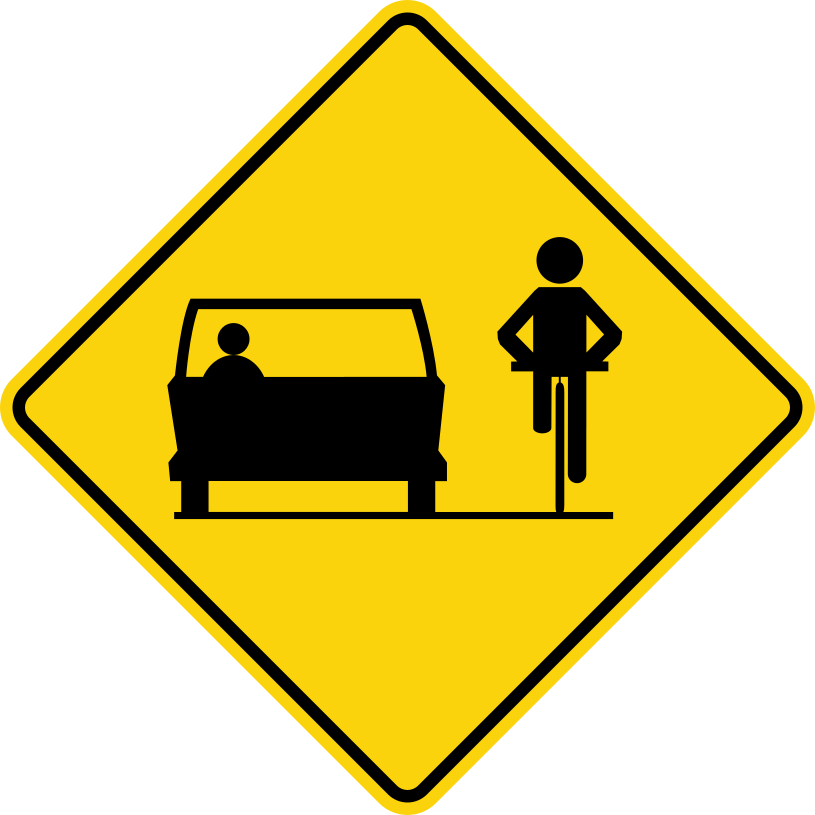
- A "turning vehicles yield to bicycles" sign may be posted where drivers must cross a bicycle lane.
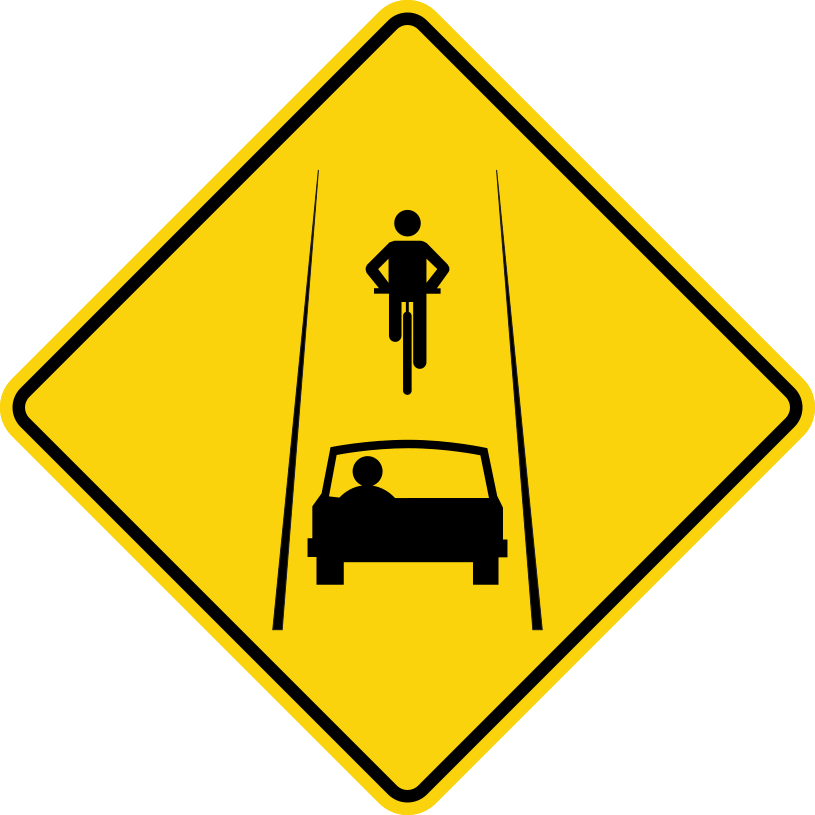
- In a shared-use lane, a bicycle symbol topped by two arrows guides cyclists and reminds drivers to expect cyclists in the same lane.
- Crosswalk lines mark pedestrian crosswalks, but a crosswalk exists at an intersection even when it is not marked, unless a sign says no crossing. Stop lines show where you must stop at intersections and railway crossings.
- An X painted on a rural highway warns that you are approaching a railway crossing; an advance warning sign will also be posted.
Signs in this section
Official source: Traffic control ↗