1.Right-of-way, stop signs and yield signs
- Right-of-way rules decide who must yield and who may go. Signs, signals and sometimes your vehicle's position relative to other vehicles decide which rule applies.
- Having the right-of-way does not end your responsibility: you must still do everything you can to prevent a collision.
- A peace officer's or police officer's directions must be followed over any traffic sign or signal.
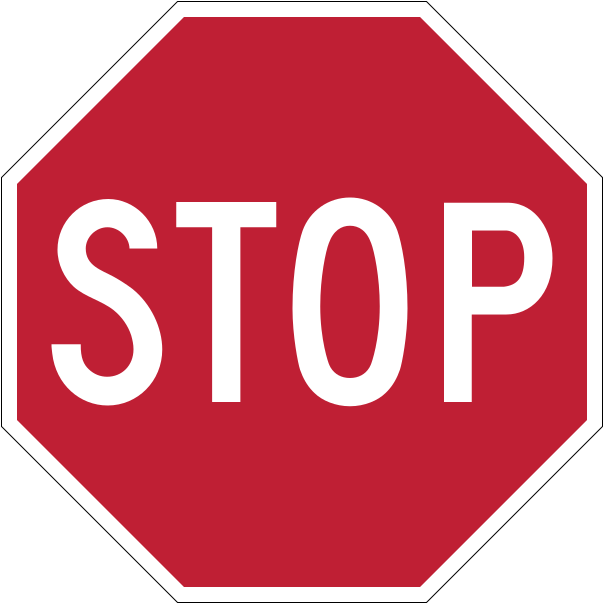
- At a stop sign, come to a complete stop, check the intersection carefully for pedestrians and other traffic, and go only when it is safe.
- Stop before the stop line if one is marked. With no stop line, stop before the marked crosswalk. With neither, stop within 3 metres of the intersecting roadway, where you will not get in the way of pedestrians.
- At three- and four-way stops ("courtesy corners") every vehicle must stop. The vehicle that arrived first goes first; if two arrive at the same time, the vehicle on the right goes first.
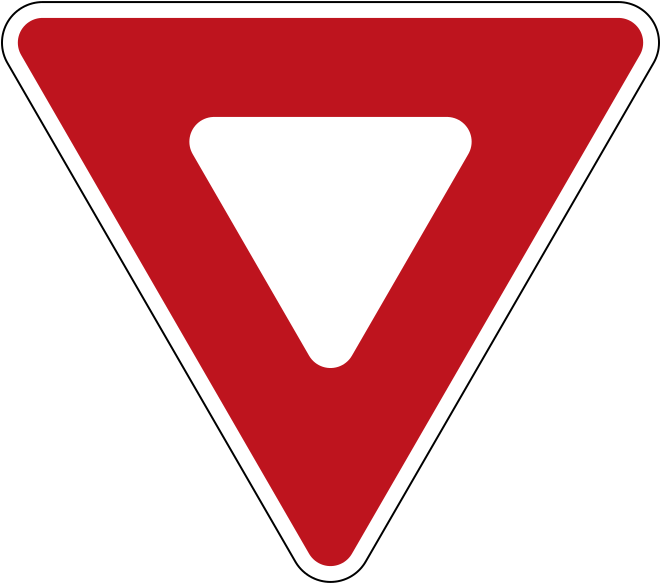
- At a yield sign, slow down and be ready to stop, and yield to traffic not facing the sign and to pedestrians. If there is no one to yield to, you may go through without coming to a complete stop.
Official source: Intersections and turns ↗ · Traffic control ↗
2.Uncontrolled intersections, crosswalks and keeping intersections clear
- At an intersection with no signs or signals, you must yield the right-of-way to a vehicle on your right. The same rule applies at intersections in parking lots.
- Approaching an uncontrolled intersection, check for traffic from both the left and the right, and even when you have the right-of-way, make sure the other vehicle is going to yield.
- At a T intersection with no signs or signals, the driver on the right has the right-of-way. Be careful: the driver going straight through may wrongly assume it is theirs.
- When leaving a service road, alley, parking lot or driveway, stop before any sidewalk crossing, stop again before entering the main street, and yield to pedestrians.
- Do not enter an intersection until you can clear it completely. If traffic is backed up, wait until there is room to clear both the intersection and the crosswalk on the far side.
- Every intersection has crosswalks, marked or unmarked. Never pass a vehicle that has stopped for a pedestrian.
- Once a pedestrian has entered a marked or unmarked crosswalk, you must yield. Stop about 2 to 3 car lengths back so drivers in other lanes can see the pedestrian and have time to stop.
Official source: Intersections and turns ↗ · Sharing the road ↗
3.Traffic circles and roundabouts
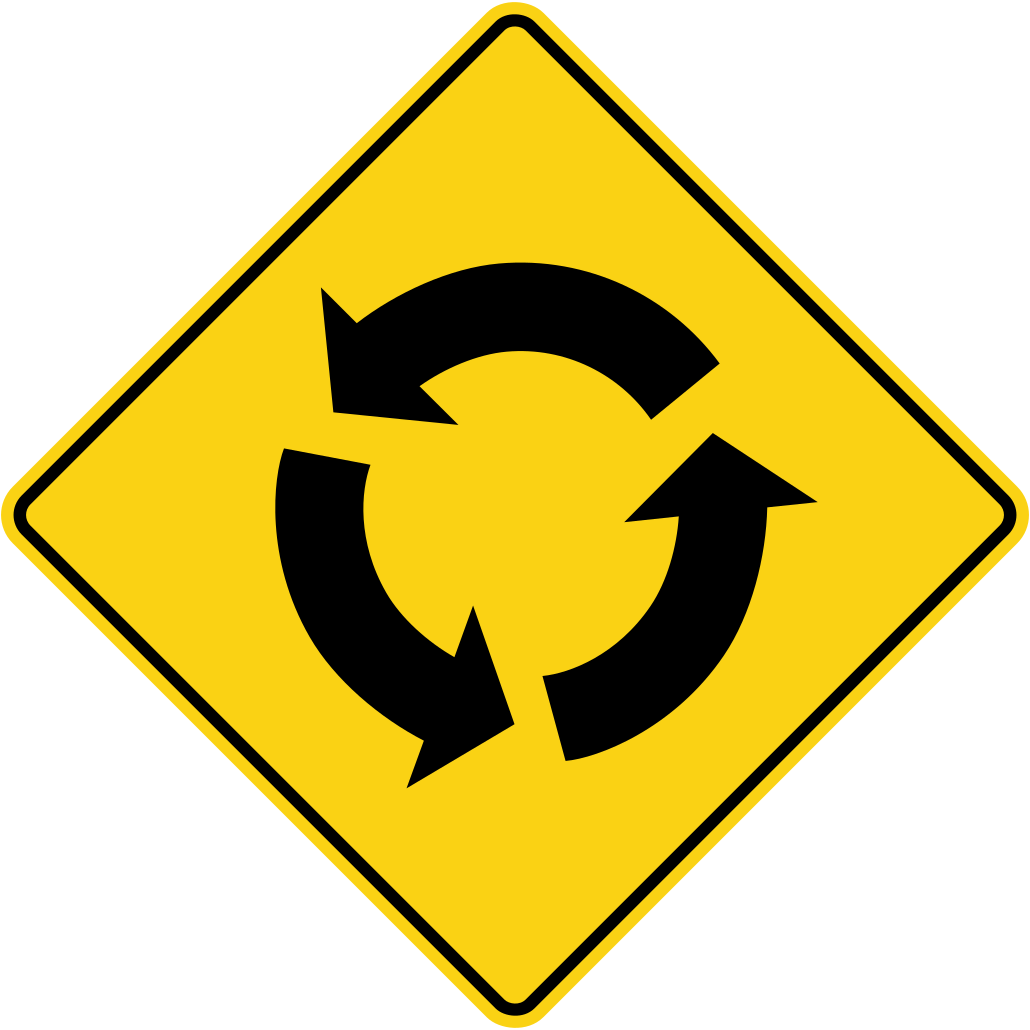
- Traffic circles and roundabouts are circular intersections. Traffic always moves counterclockwise around the centre island, and vehicles entering must yield to traffic already in the circle.
- A roundabout has a smaller centre island and a tighter curve than a traffic circle, to keep speeds low; it may have a sloped curb that gives large commercial vehicles more room. Obey its signs and pavement markings.
- Pedestrian crossings at roundabouts are set back from the intersection. As you approach, scan for pedestrians and cyclists at the crosswalks at the entrance and the exits.
- Signal right to leave the circle. Turn the signal on only after you pass the exit before the one you want, so other drivers know you will take the next exit. For the first exit, signal right as you approach and keep it on until you are out.
- In a two-lane circle, pick your lane before you enter and keep it: do not change lanes in the circle. Drivers on the right yield to drivers on the left.
- When you leave from the left lane, check for traffic in the right lane that may be continuing around the circle, and use caution as you cross it.
- If you cannot stop or exit safely, stay in your lane and go around the circle again.
| Two-lane circle: where you are going | Lane to enter and exit | Signal as you approach |
|---|---|---|
| First exit | Right lane | Right signal, left on until you have exited |
| Any exit past the first | Left lane | Left signal (you are not taking the first exit); switch to the right signal after passing the exit before yours |
Signs in this section
Official source: Intersections and turns ↗
4.Preparing to turn and signalling
- Prepare for a turn well in advance and be in the proper turning lane at least 15 metres before the intersection.
- If you are not in the right lane, check your inside and outside mirrors, do a shoulder check, signal, and change lanes when it is safe.
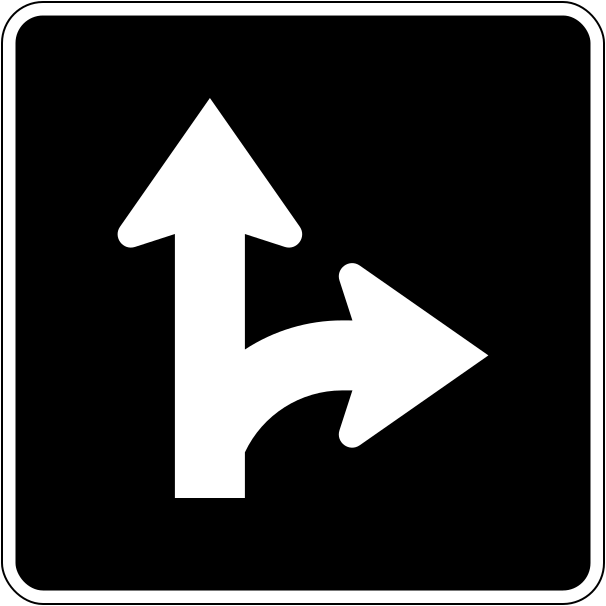
- As you approach an intersection, always check the signs and pavement markings so you are in the correct lane to turn or to go straight.
- You must use your signal when turning left or right, when changing lanes, and when moving away from the curb or a parking lane.
- Signal early enough to give other drivers and pedestrians reasonable warning — but not so early or so late that you confuse them. Turn the signal off if it does not cancel by itself.
- Pulling away from the right side of the road, use your left signal to show you are entering traffic; from the left side of a one-way road, use your right signal.
- Besides the electrical signal lights, the guide shows hand signals for a left turn, a right turn and slowing or stopping. Learn the arm positions from the drawing in the guide.
Official source: Intersections and turns ↗ · Basics of driving ↗
5.Right turns
- A travel lane is any part of the road wide enough for a single line of vehicles, whether or not it is marked. The curb lane is not just for parking: it is used to turn off and onto a road.
- Yield to pedestrians and to vehicles on the cross street, and check over your right shoulder for cyclists and pedestrians approaching the intersection.
- Turning right from a two-way road onto another two-way road, stay centred in the turning lane and no more than one metre from the curb or road edge — before, during and after the turn.
- Do not enter the crosswalk to turn until pedestrians are safely out of the intersection.
- If a parked car or obstruction sits close to the corner of the street you are turning onto, turn into the first available lane to its left. If it is far enough away, finish the turn in the curb lane behind it, then change lanes to the left when safe.
- Do not swing wide and take up two lanes when you turn.
- Unless a sign prohibits it, you may turn right on a red light after a complete stop at the proper stopping point (stop line or crosswalk).
Official source: Intersections and turns ↗
6.Left turns
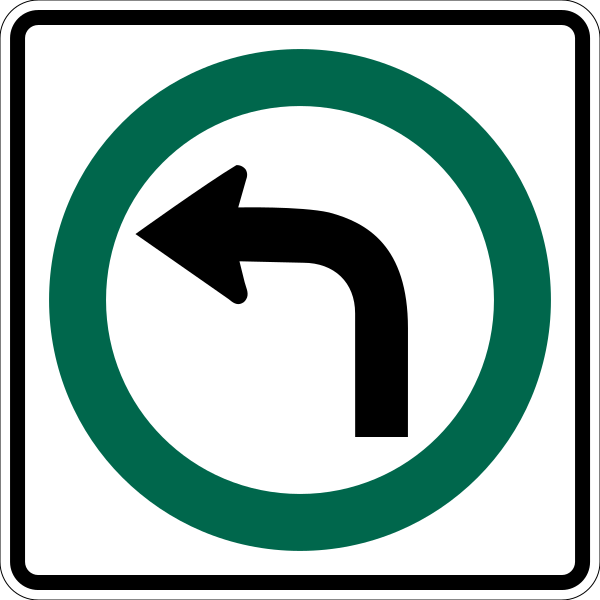
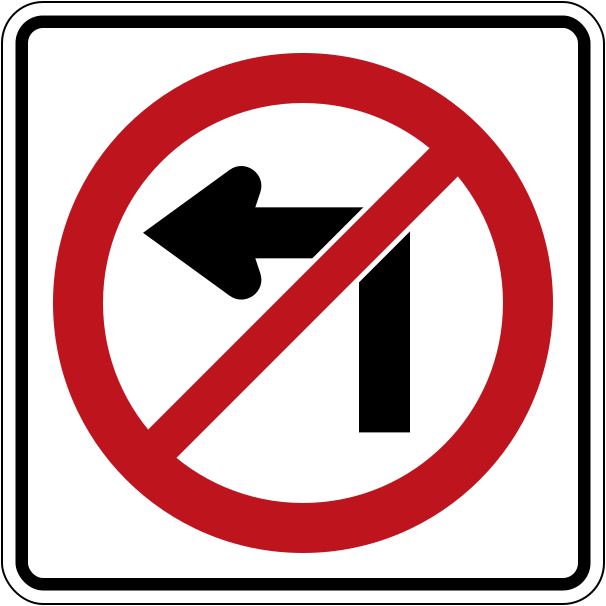
- Misjudging time and space when turning left is a leading cause of collisions: you cross the lanes of oncoming traffic, with vehicles possibly coming from several directions. Do not turn across an approaching vehicle until it is safe.
- Yield to oncoming traffic and to pedestrians crossing on your left, and check the crosswalk of the road you are turning onto for pedestrians and cyclists.
- If there is room for only one vehicle ahead of your lane in the intersection, wait behind the crosswalk; enter when that vehicle has cleared, if it is legal to do so.
- If you must stop in the intersection before finishing a left turn, stay right of the yellow line with your front wheels pointed straight ahead, so a rear-end collision cannot push you into oncoming traffic.
- Before turning left off a two-lane highway, do a shoulder check to the left to make sure no one is passing you on your left.
- Do not swing wide into two lanes; finish the turn on the right side of the yellow line of the road you have entered.
- On a red light, unless a sign prohibits it, you may turn left from a one-way road onto another one-way road after a complete stop at the stop line or crosswalk, if the turn can be made safely. Yield to pedestrians crossing on your left.
| Turning left | Turn from | Turn into |
|---|---|---|
| Two-way onto two-way | The lane nearest to, and right of, the yellow line | The lane nearest to, and right of, the yellow line |
| Two-way onto one-way | The lane nearest the yellow line | The first available lane on the left side of the road |
| One-way onto two-way | The lane nearest the left side of the road | The nearest lane to the right of the yellow line |
| One-way onto one-way | The lane nearest the left side of the road | The lane nearest the left side of the road |
Signs in this section
Official source: Intersections and turns ↗
7.Dual turn lanes and two-way left turn lanes
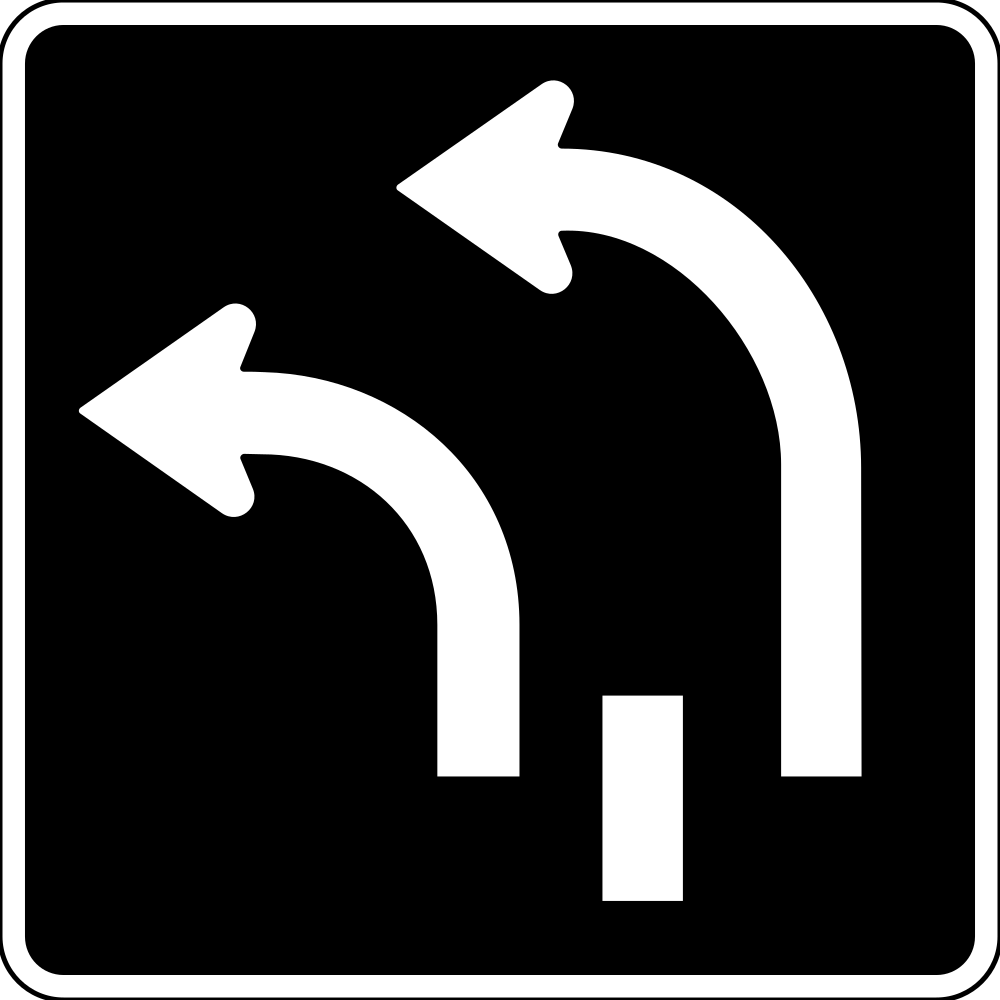
- Dual lane turns may be made only where pavement markings or signs show them. Approach in one of the marked lanes and turn into the matching lane.
- Never swing wide or change lanes during a dual lane turn — another vehicle may be turning beside you. Keep your lane position during and after the turn, and watch the vehicle beside you in case it drifts into your lane.
- Unless a sign prohibits it, you may turn right on red at a dual right turn intersection after a complete stop at the stop line or crosswalk, if the turn can be made safely. The left-on-red rule for one-way onto one-way also applies to dual lane turns.
- After the turn, the two lanes may merge into one. The driver in the lane that ends must move over using the proper lane-change steps.
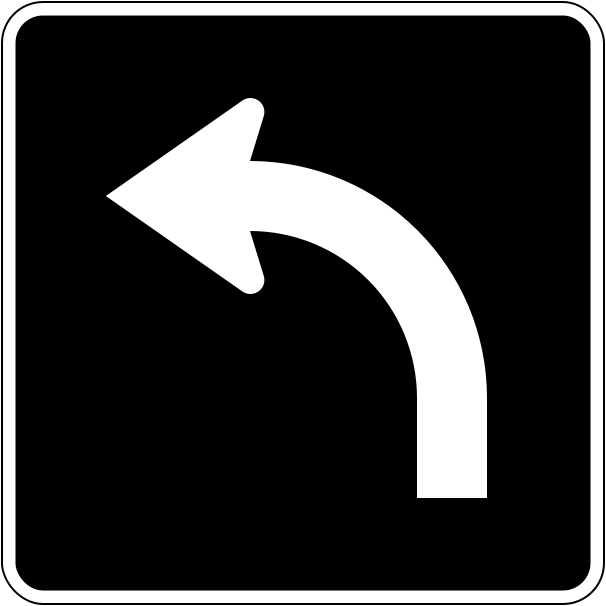
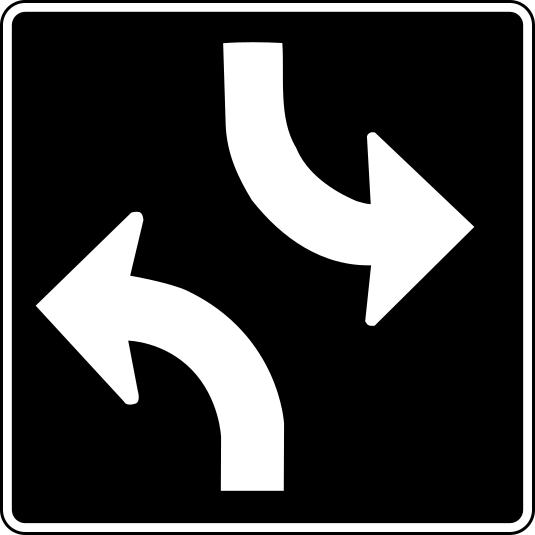
- A two-way left turn lane is a centre lane that drivers from both directions share to turn left. You may cross the solid yellow line to enter it.
- Enter a two-way left turn lane only close to where you will turn, and watch for oncoming vehicles using the same lane.
Signs in this section
Official source: Intersections and turns ↗ · Traffic control ↗
8.U-turns and reversing
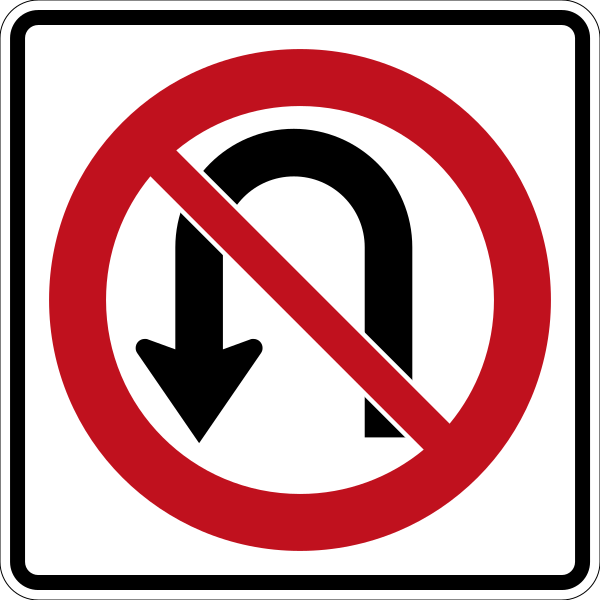
- A U-turn means turning around at an intersection to go the opposite way, using the oncoming lanes. Never make one unless it can be done safely.
- U-turns are not allowed at an intersection controlled by traffic lights unless a traffic control device permits it, or anywhere a sign prohibits them.
- In urban areas, no U-turns between intersections, at an alley intersection, or at an intersection where one of the roads is an access to a parking lot the public can use.
- Outside urban areas, no U-turns on a curve, or on the approach to or near the crest of a hill where a driver within 150 metres coming from either direction cannot see you.
- Reverse only at a crawl or slow walking speed, and only after looking behind the vehicle and making sure the path is clear of traffic, pedestrians and obstacles. Before backing out of a driveway, walk around the vehicle to check for dangers.
- When backing out of a driveway, steer into the nearest traffic lane and then drive forward — do not reverse into a second lane.
- It is illegal to reverse into an intersection or a crosswalk.
Signs in this section
Official source: Intersections and turns ↗ · Basics of driving ↗