1.Speed limits
- A speed limit is the highest speed allowed when conditions are ideal, not a speed you should always drive. Any speed that is unsafe for the current conditions is illegal.
- Unless a sign shows otherwise, the limit is 100 km/h on a provincial highway outside an urban area and 80 km/h on a provincial highway inside a city's corporate limit.
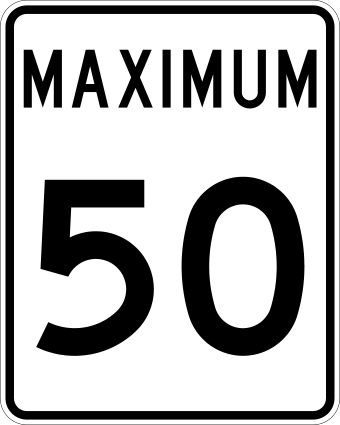
- Unless posted otherwise, the limit is 80 km/h on a roadway outside an urban area and 50 km/h on a roadway within an urban area.
- Municipalities may set different limits by bylaw, so watch for every sign and posted limit. Speed limit signs are in kilometres per hour (km/h).
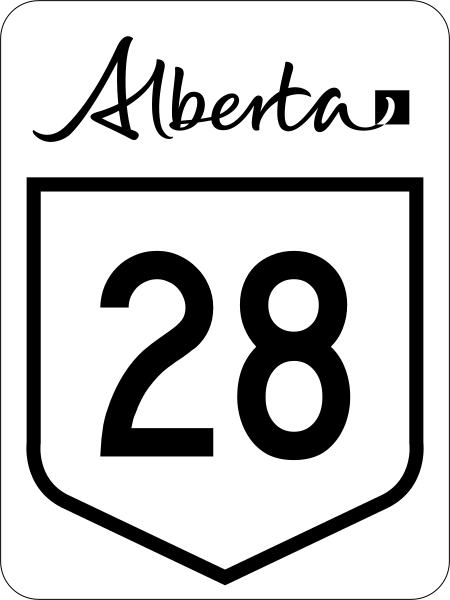
- A provincial highway is identified by a highway route marker with 1, 2 or 3 digits. A local road usually has no route marker, but may carry a name or a township or range road number.
- Never exceed the posted limit, and drive with the flow of traffic: driving too slowly can also be a hazard.
- Speeding costs demerit points: 2 for up to 15 km/h over the limit, 3 for 16 to 30 km/h over, 4 for 31 to 50 km/h over and 6 for 51 km/h or more over.
| Road (unless otherwise posted) | Maximum speed |
|---|---|
| Provincial highway outside an urban area | 100 km/h |
| Provincial highway inside the corporate limit of a city | 80 km/h |
| Roadway outside an urban area | 80 km/h |
| Roadway within an urban area | 50 km/h |
Signs in this section
Official source: Traffic control ↗ · Basics of driving ↗ · Driving within the law ↗
2.School and playground zones
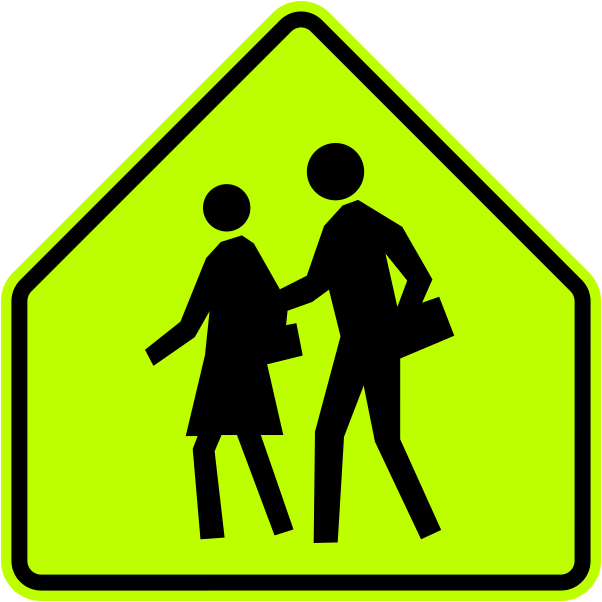
- A school sign with a maximum speed posted with it marks a school zone. The limit in both urban and rural school zones is 30 km/h unless another speed is posted.
- School zones apply on school days only, from 8:00 a.m. to 9:30 a.m., 11:30 a.m. to 1:30 p.m. and 3:00 p.m. to 4:30 p.m. A municipality may set other times by bylaw; they are then posted beneath the school sign.
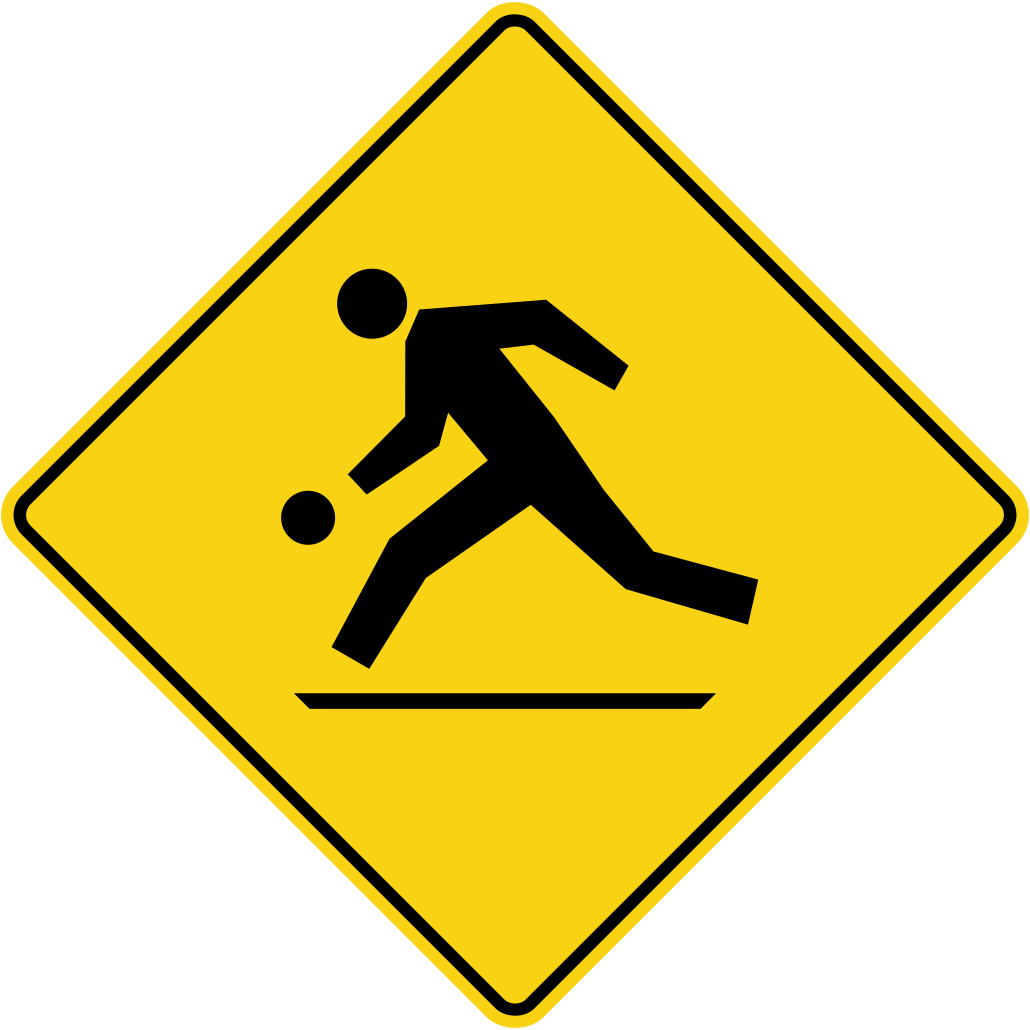
- A playground sign with a maximum speed attached marks a playground zone. While it is in effect, the limit in urban and rural playground zones is 30 km/h unless another speed is posted.
- Playground zones are in effect every day, not only on school days, from 8:30 a.m. until 1 hour after sunset. Different municipal times are posted beneath the playground sign.
- While a school or playground zone is in effect, you may not pass, or try to pass, a vehicle travelling in the same direction.
- A zone ends at a sign showing a higher maximum speed or the end of the zone. A school or playground sign with no speed sign marks a school area or playground area: no lower limit applies, but use caution because children may be near.
- When yellow lights are flashing on a school, playground or pedestrian crossing sign, reduce speed to a maximum of 30 km/h and yield or stop for pedestrians.
| Sign | Speed | When it applies |
|---|---|---|
| School zone (school sign with a speed) | 30 km/h unless posted | School days only: 8:00 a.m.–9:30 a.m., 11:30 a.m.–1:30 p.m., 3:00 p.m.–4:30 p.m. |
| Playground zone (playground sign with a speed) | 30 km/h unless posted | Every day: 8:30 a.m. to 1 hour after sunset |
| School area or playground area (no speed sign) | No lower limit: use caution | Always |
Signs in this section
Official source: Traffic control ↗ · School and playground zones ↗
3.Construction zones, slow vehicles, curves and hills
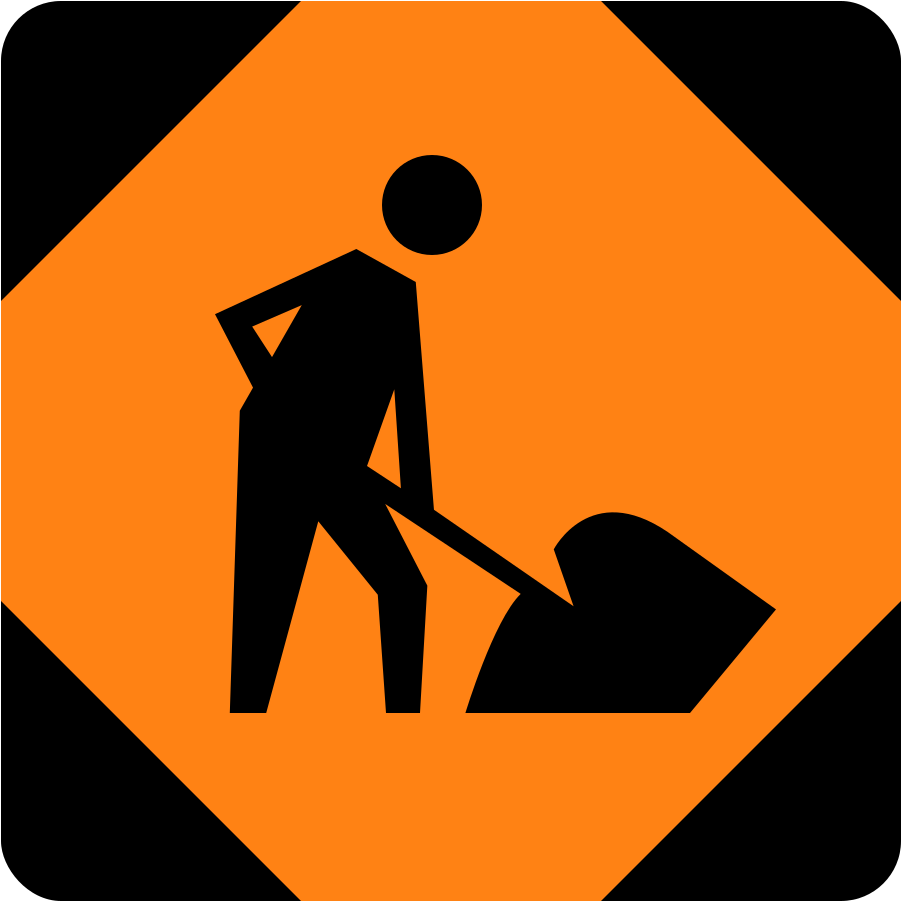
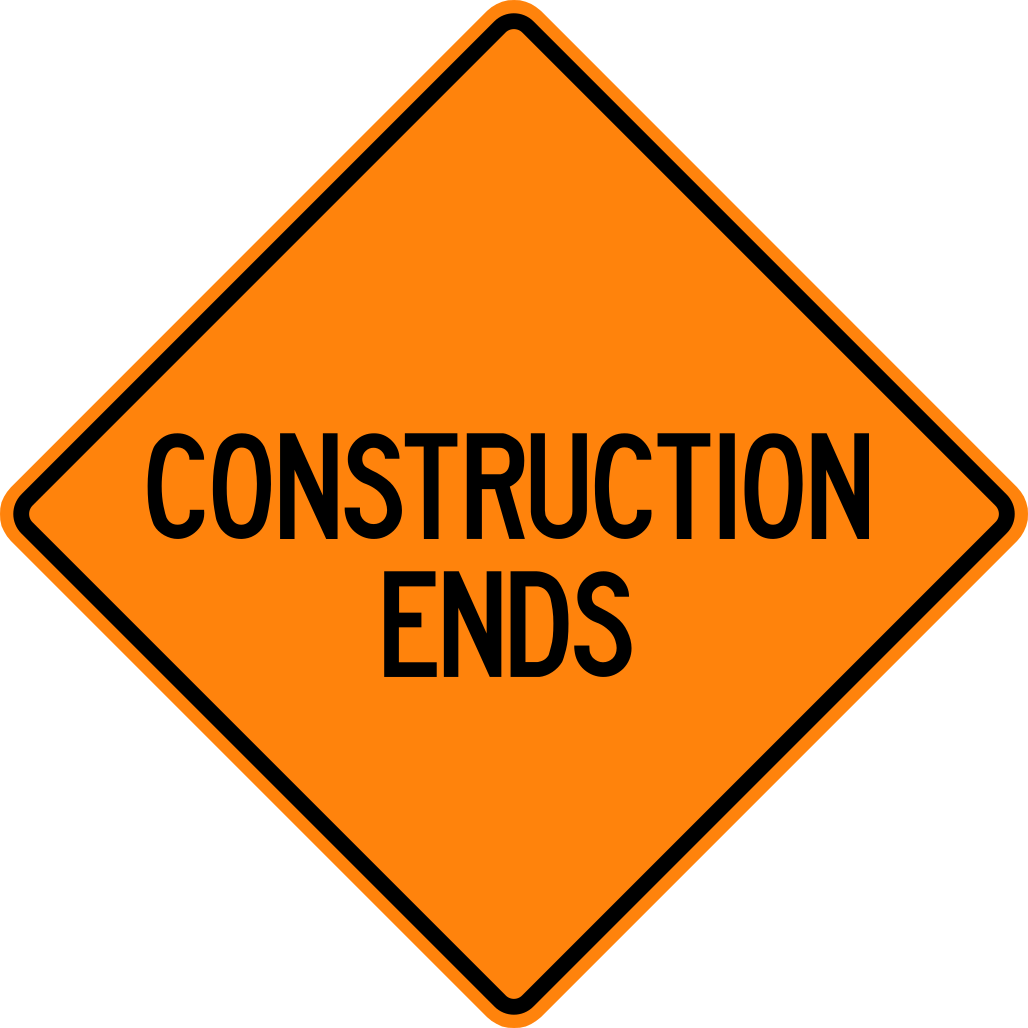
- Obey the speed limit in a construction zone at all times, even when no people or equipment are working: bumps, fresh oil and loose gravel may still be there.
- If workers are present, fines in a construction zone are doubled.
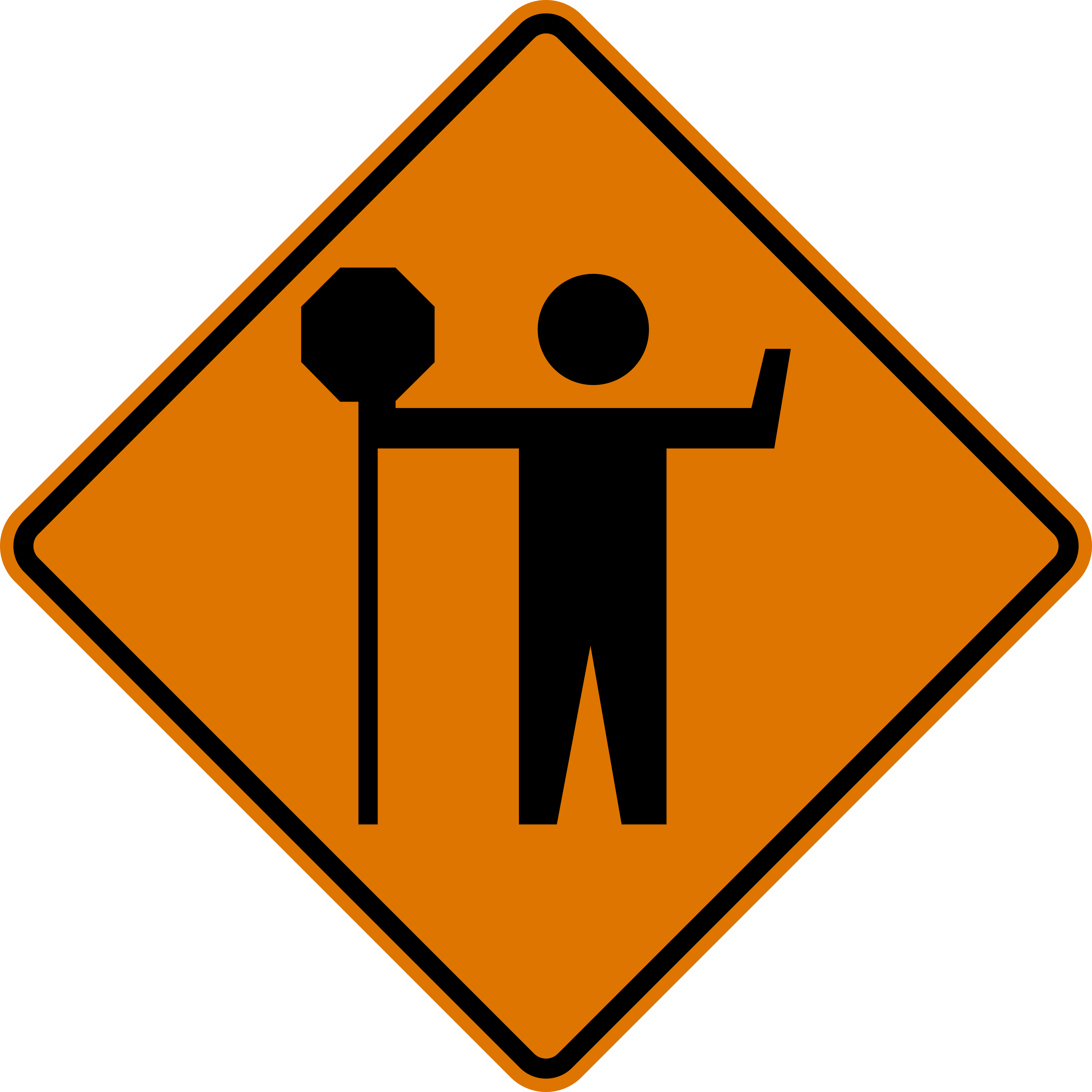
- Obey the flag person's signal and be prepared to slow down and stop if required.
- A slow-moving vehicle sign is placed on the back of vehicles that travel less than 40 km/h, such as farm tractors and construction equipment. Be prepared to reduce your speed.
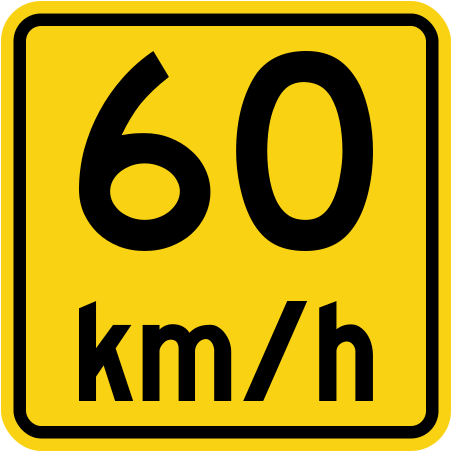
- A speed tab posted with a curve warning shows the recommended maximum speed through that curve under ideal driving conditions.
- If you need to slow down for a curve, do it before you enter it. Stay centred in your lane by looking well ahead and around the curve, and keep a safe, steady speed once you are in it.
- On a very steep downhill, adjust your speed: it takes longer to stop when you are travelling down a hill.
Signs in this section
Official source: Traffic control ↗ · Highways and freeways ↗
4.Stopping distance and following distance
- Total stopping distance is perception distance plus reaction distance plus braking distance: how far you travel while you recognize the need to stop, while you move your foot to the brake, and while the brakes bring you to a stop.
- Perception time is about three-quarters of a second, and less experienced drivers often take longer. Average reaction time is another three-quarters of a second.
- Factors you can control include your speed, your alertness and fatigue, your use of alcohol or drugs, how well you scan ahead and decide, and the condition of your brakes and tires.
- Begin braking early and release the accelerator before you brake. To stop quickly, use threshold braking: brake firmly without locking the wheels, so you can still steer.
- Under normal road and weather conditions, stay at least 2 seconds behind the vehicle ahead. Increase that distance when conditions are less than ideal.
- To check the gap, start counting "one-thousand-and-one, one-thousand-and-two" as the vehicle ahead passes a fixed object such as a road marking. If you reach the object before you finish, you are too close: slow down and count again. The rule works at any speed.
- Drivers of large vehicles such as motor homes should keep at least 4 seconds. Following too closely is worth 4 demerit points.
| Part of stopping | What happens | Typical time |
|---|---|---|
| Perception | You recognize the situation and understand you need to stop | About three-quarters of a second |
| Reaction | You move your foot from the accelerator to the brake | Three-quarters of a second on average |
| Braking | The vehicle slows from the moment the brakes are applied until it stops | Depends on speed and conditions |
Official source: Basics of driving ↗ · Responsible driving ↗ · Driving within the law ↗
5.Choosing a lane and changing lanes
- Choose the lane that best meets your needs for safety and for reaching your destination. Plan ahead: do not leave lane changes to the last minute.
- Where lines on the road surface divide it into lanes, drive in the centre of your lane.
- On a multi-lane highway, slower traffic should use the lane furthest to the right unless it needs the left lane to turn left. That leaves the left lane free for passing.
- Your mirrors do not show what is right beside and slightly behind you in the next lanes. To cover these blind spots, you must shoulder check as well as check your mirrors before changing lanes.
- To change lanes: make sure the change is permitted, check your inside and outside mirrors, shoulder check for vehicles and cyclists, signal, change lanes when safe while keeping your speed as much as possible, then make sure the signal is off.
- A passing lane is added to a highway, often in the mountains. Slower vehicles move into the right lane so others can pass safely on the left. Where it ends, drivers in the right lane must merge safely to the left, and drivers in the left lane must cooperate to let them in.
- A traffic lane violation is worth 2 demerit points.
Official source: Highways and freeways ↗ · Driving within the law ↗
6.Passing on a two-lane highway, and being passed
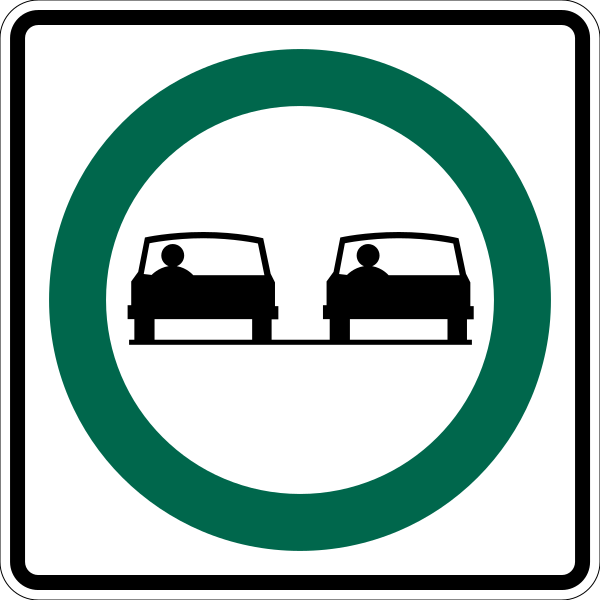
- On a two-lane highway, passing is difficult and dangerous: errors in judgement can cause head-on collisions, which often kill. Pass only where it is legal, when it is necessary, and with extreme caution.
- Before passing, keep a safe following distance, make sure there is no oncoming traffic for a safe distance, check your mirrors, shoulder check to the left for anyone passing you, and signal left.
- Just before you pull out, check again that no traffic is coming and that you can finish the pass while passing is still permitted.
- It is illegal to exceed the speed limit while passing another vehicle.
- Return once you can see the vehicle you passed in your inside rear view mirror: shoulder check to the right, signal right, move back while keeping your speed, and make sure the signal is off.
- When you are being passed, help the other driver by staying in your lane and moving to the right side of it, which gives them a better view of the road ahead.
- Improper passing and impeding a passing vehicle are each worth 3 demerit points.
Signs in this section
Official source: Highways and freeways ↗ · Driving within the law ↗
7.When passing is not allowed
- Do not pass when oncoming vehicles are too close. If you have any doubt about completing the pass safely, do not try it.
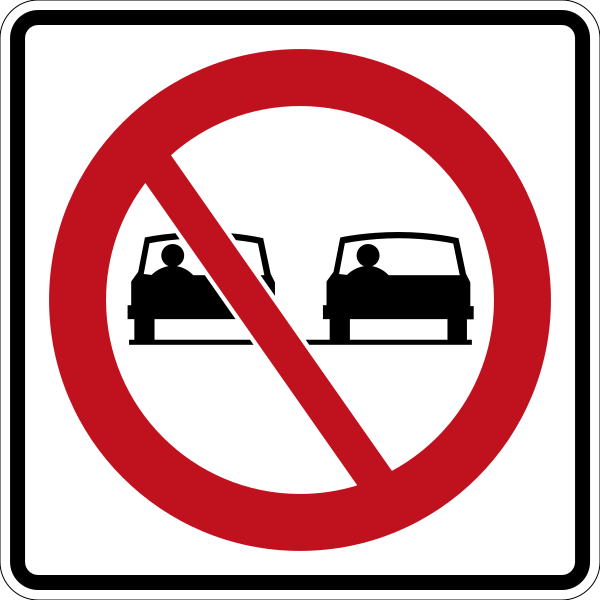
- Do not pass when a solid yellow line is on your side of the centre line, or where a sign shows a no passing zone.
- Where a solid and a broken yellow line run side by side, only the driver with the broken line on their side may pass.
- An Alberta rule to know: inside an urban area you may pass safely across a single solid yellow line. Everywhere else, single or double solid yellow lines mean passing is not permitted.
- Do not pass in a school or playground zone during its times, or when another vehicle has stopped to let a pedestrian cross at a marked or unmarked crosswalk.
- Do not pass a school bus with flashing red lights and its stop arm out. Passing one with flashing amber lights is not the safest choice either, because it may be about to stop; if you do go, use caution.
- On highways with one lane in each direction, do not pass on curves (it is unsafe and illegal), and do not pass near the top of a hill, where you cannot see what is ahead.
Signs in this section
Official source: Highways and freeways ↗ · Traffic control ↗
8.Merging, exiting and the emergency stopping lane
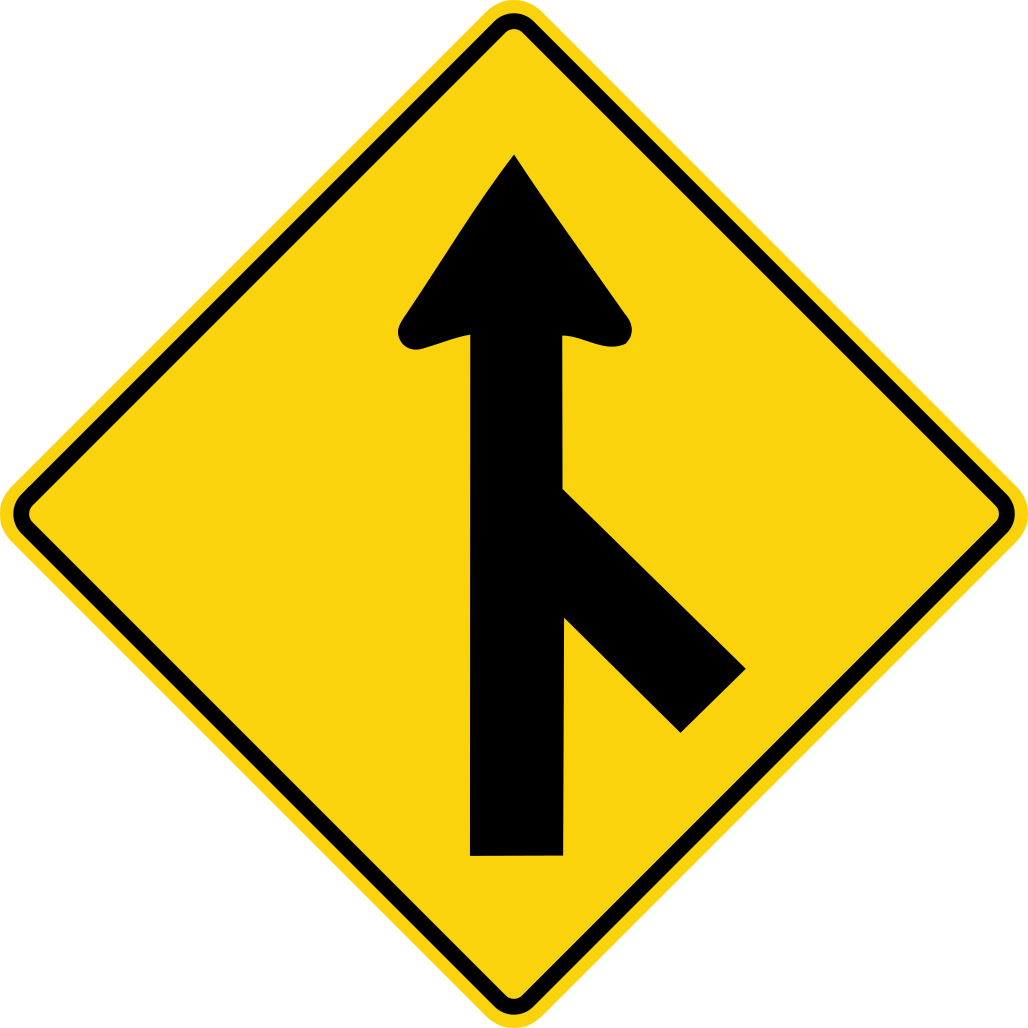
- When two roadways join, neither the merging vehicle nor the vehicles already on the highway have the right-of-way. Merging is a shared responsibility.
- Plan and time your approach so you blend in without stopping or slowing abruptly: check the highway traffic as soon as you can see the lane you will join, choose a gap, and signal before or when you are in the acceleration lane.
- Accelerate to the speed of traffic on the main road and keep shoulder checking the gap. Move into it when safe and legal, after you are past the solid white line of the acceleration lane.
- Avoid slowing abruptly or stopping when you merge: drivers behind expect you to keep moving and could hit you from behind. If you are on the main road and traffic is merging, move left to the next lane if it is safe.
- To exit, be in the proper lane well before your exit, signal well in advance, and do most of your slowing in the deceleration lane. If you miss your exit, do not stop: continue to the next one. Never stop and reverse on a highway, emergency stopping lane or shoulder.
- In a weave zone, where the highway entrance and exit share the same lane, control your speed and the timing of your lane change, and use caution so all vehicles can exit and enter safely.
- The emergency stopping lane (the shoulder of a primary highway) is for drivers who must stop for an urgent situation or a vehicle problem. Do not drive in it, pass in it, or help another vehicle pass you by using it.
Signs in this section
Official source: Highways and freeways ↗