Practice session
Regulatory signs
Loading…
Every question on this page
The whole pool, with the answer and the explanation for each one. Practise first, then read through anything you were unsure of.
Show all 25 questions with answers
1 of 25 · Regulatory signs
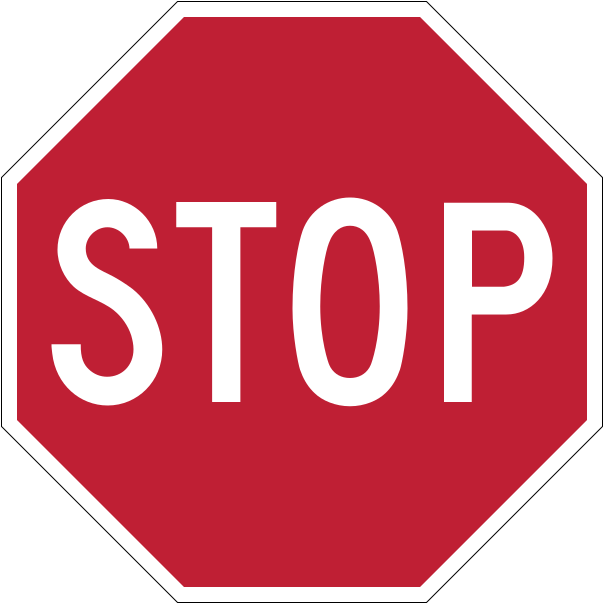
What must you do when you reach this sign?
- A.Come to a complete stop, then go only when it is safeAnswer
- B.Slow down, and stop only if you see cross traffic
- C.Stop only when pedestrians are in the crosswalk
Explanation: A stop sign always requires a full stop, even when the intersection looks empty. Once stopped, yield to pedestrians and traffic, and move on only when it is safe.
2 of 25 · Regulatory signs
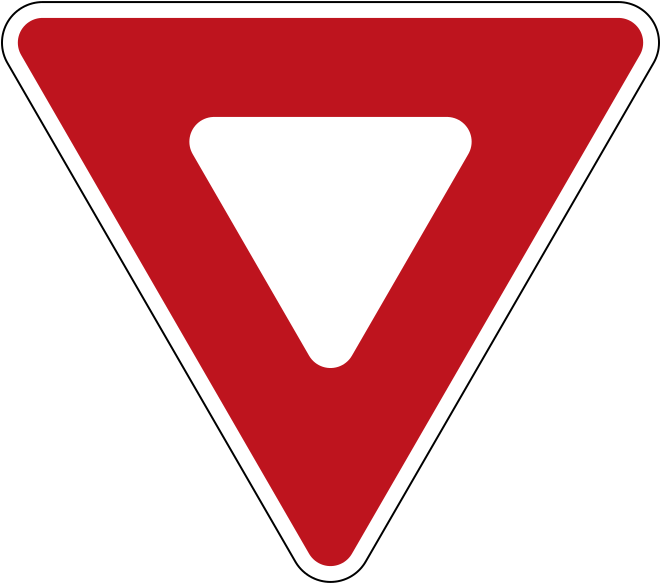
At this sign, whom must you give the right-of-way to?
- A.Only vehicles coming from your left
- B.Traffic not facing the sign, and pedestrians waiting to cross or already crossingAnswer
- C.No one: this sign gives you the right-of-way
- D.Only buses and trucks
Explanation: A yield sign means other road users go first: vehicles that do not face the sign, and every pedestrian waiting at or already in the crosswalk. Slow down and stop if you must; if there is no one to yield to, you may carry on without stopping.
3 of 25 · Regulatory signs
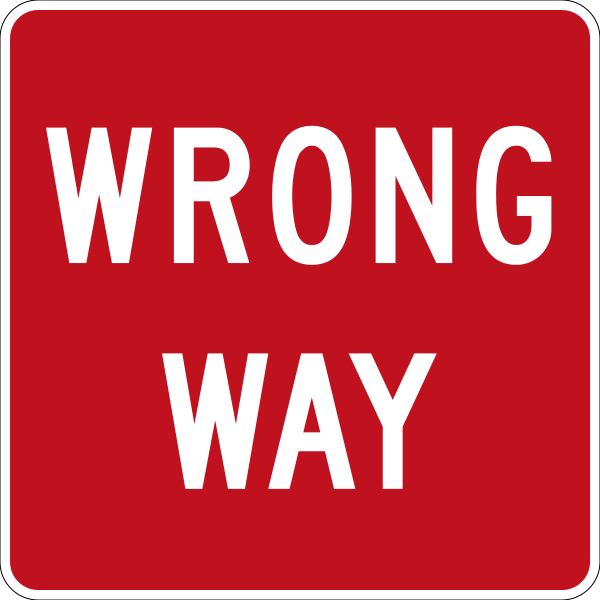
This sign is facing you. What does it tell you?
- A.The road ahead carries two-way traffic
- B.You must turn right at the next intersection
- C.You are driving against the flow of trafficAnswer
- D.Traffic ahead is merging from the left
Explanation: The wrong-way sign faces drivers who have entered a road or ramp in the wrong direction: traffic is coming toward you. Do not continue; stop safely and turn around.
4 of 25 · Regulatory signs
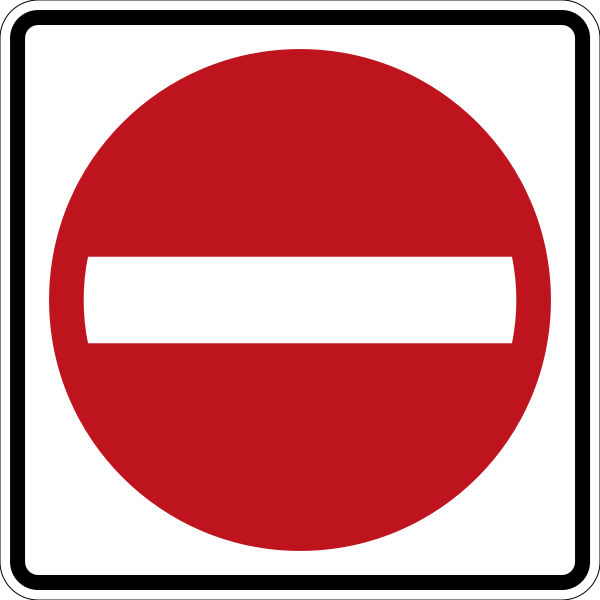
What does this sign mean?
- A.Do not drive past it: vehicles may not enter from this directionAnswer
- B.You may enter after coming to a complete stop
- C.Only buses may enter
- D.The road ahead is a dead end
Explanation: A do-not-enter sign is posted where traffic from your direction is not allowed, such as the far end of a one-way street or the exit end of a ramp. Do not go past it; find another route.
5 of 25 · Regulatory signs
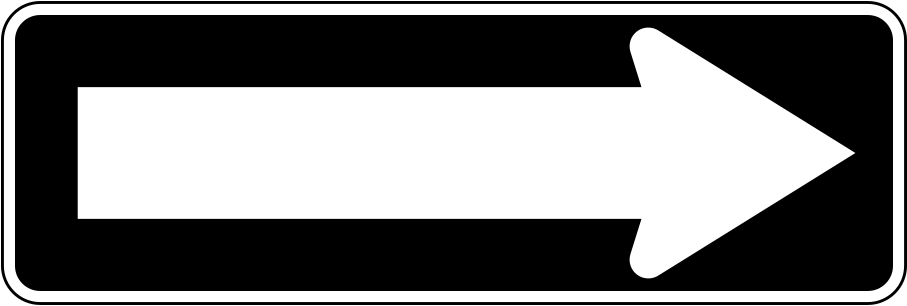
What does this sign tell you about the road?
- A.You must turn in the arrow’s direction at the next intersection
- B.Traffic may move only in the direction of the arrowAnswer
- C.Keep to the right of a divider ahead
Explanation: The one-way sign shows that all traffic on this road travels in the direction of the arrow. Never drive against it, and when turning onto the road, turn into the arrow’s direction.
6 of 25 · Regulatory signs
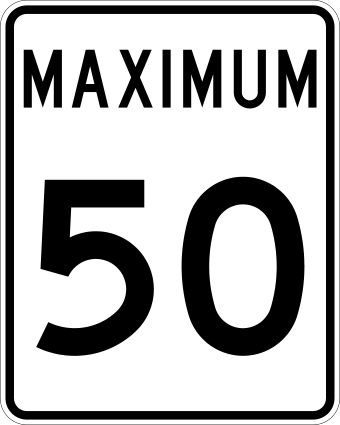
What does the number on this sign represent?
- A.The speed you should always drive at
- B.The minimum speed allowed
- C.A suggested speed you may exceed on an empty road
- D.The maximum speed allowed when conditions are idealAnswer
Explanation: A speed limit is a ceiling, not a target: it is the highest speed permitted when conditions are ideal. In rain, snow, fog or heavy traffic you must drive slower, because any speed that is unsafe for the conditions is illegal.
7 of 25 · Regulatory signs
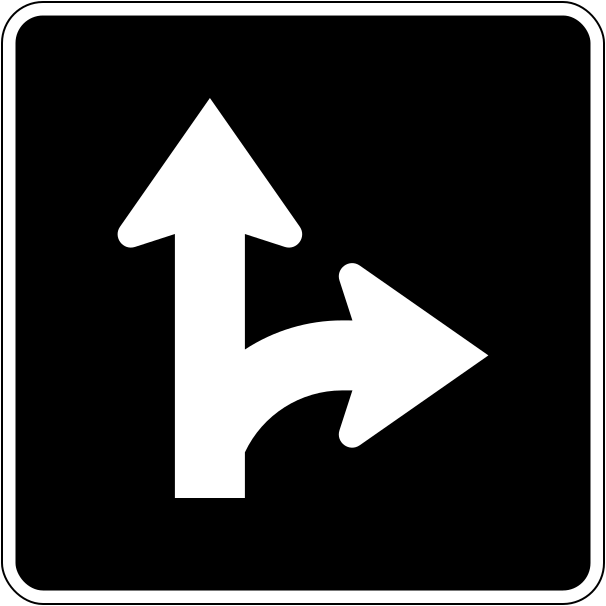
You are in a lane with this sign above it. What may you do at the intersection?
- A.Turn left only
- B.Go straight, turn right or turn left
- C.Go straight or turn rightAnswer
- D.Turn right only
Explanation: Designated lane signs show the only movements allowed from that lane. Here the arrows allow going straight or turning right; a left turn must be made from a lane whose sign allows it.
8 of 25 · Regulatory signs
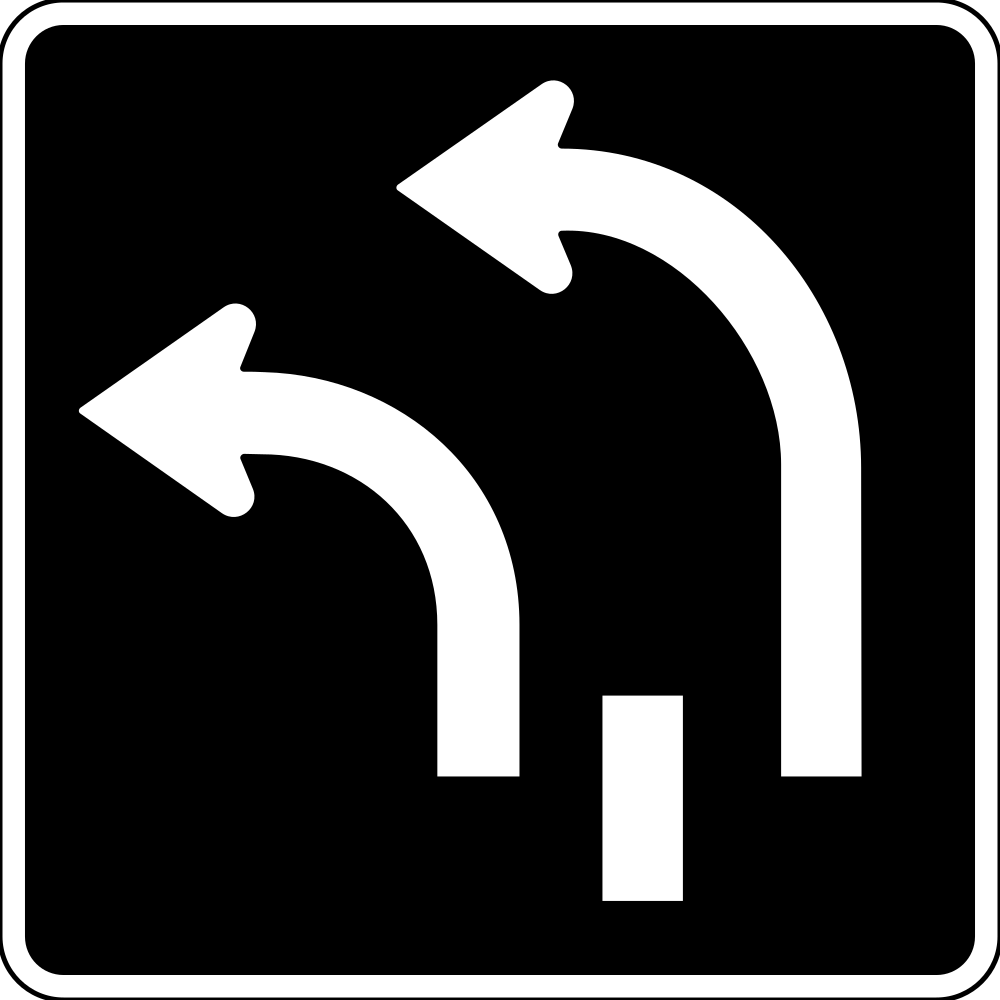
Under this sign, two lanes of traffic turn left at the same time. What must you do?
- A.Stay in your own lane during and after the turnAnswer
- B.Move into the other lane halfway through the turn
- C.Let the other lane finish turning before you start
- D.Finish in whichever lane is empty
Explanation: Where more than one vehicle turns the same way at once, each driver keeps to the lane they started in, through the turn and after it. Drifting across risks a side collision with the vehicle turning beside you.
9 of 25 · Regulatory signs
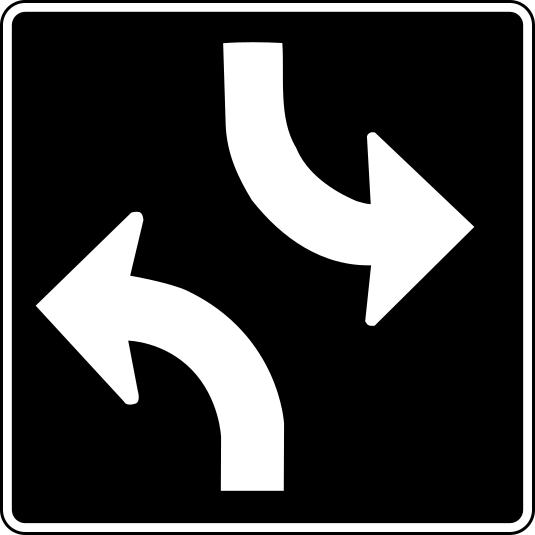
What is the centre lane marked by this sign used for?
- A.Passing slower vehicles
- B.Through traffic during rush hour
- C.Buses and taxis only
- D.Left turns by traffic travelling in either directionAnswer
Explanation: In a two-way left turn lane, drivers from both directions share the centre lane, and only to turn left. Do not use it to pass or to travel along the road, and watch for a vehicle coming toward you in the same lane.
10 of 25 · Regulatory signs
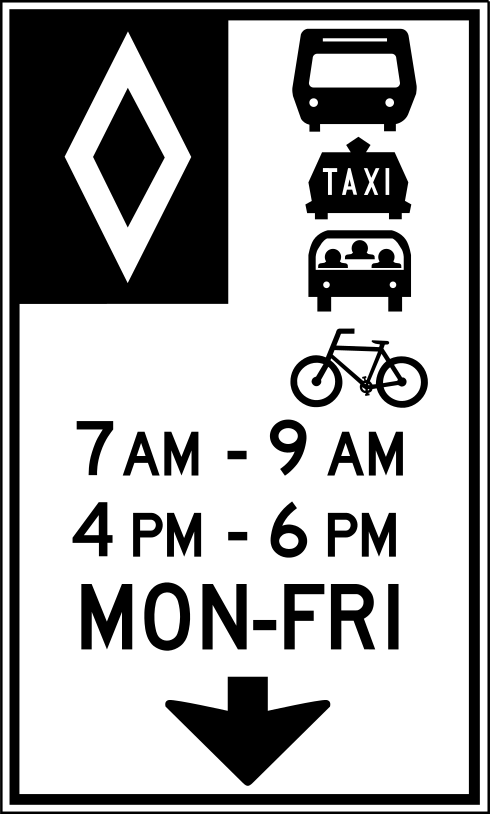
A reserved lane sign like this one shows hours and days. What does that mean?
- A.The lane is closed to all traffic during those hours
- B.The lane is reserved only during the hours and days shownAnswer
- C.Anyone may use the lane during the hours shown
Explanation: Reserved lanes, marked with a diamond, are kept for the vehicles pictured, such as buses, taxis or bicycles. Some operate at all times; a lane that is reserved only part of the time shows the hours and days when the restriction applies.
11 of 25 · Regulatory signs
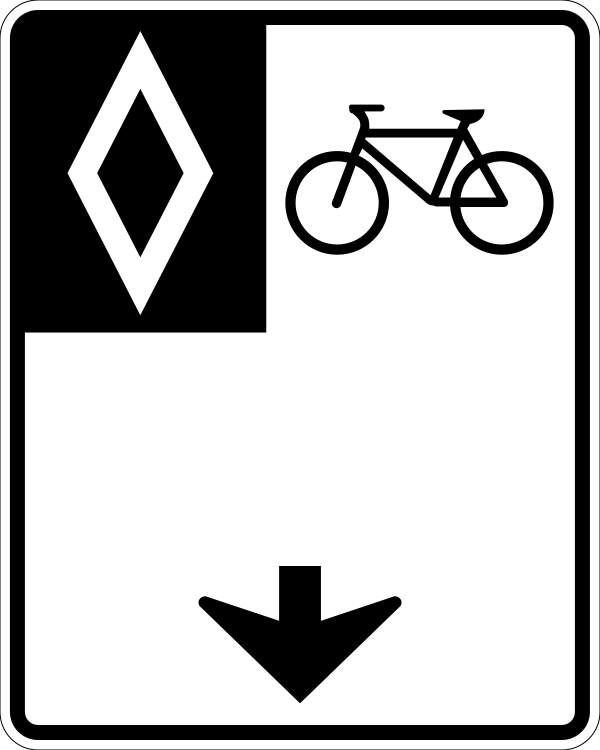
When may a driver enter a lane marked with this sign?
- A.Whenever no cyclists are in sight
- B.To pass a slow vehicle on the right
- C.Only to turn, or to enter or leave a parking spotAnswer
- D.To wait while picking up a passenger
Explanation: Bicycle lanes belong to cyclists. A driver may enter one only to turn or to get into or out of a parking spot, and must check carefully for bicycles first. The lane line is often dashed near corners where right-turning vehicles cross it.
12 of 25 · Regulatory signs
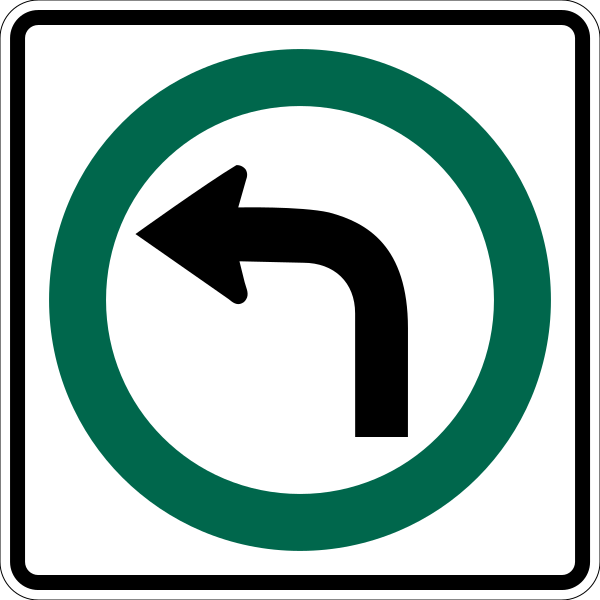
What does a green circle on a white square, as on this sign, mean?
- A.The action shown inside the circle is permittedAnswer
- B.The action shown inside the circle is prohibited
- C.A hazard lies ahead
Explanation: Permissive signs are a green circle on a white square: whatever is shown inside the circle is allowed. On this sign the only movement allowed is a left turn. A red circle with a diagonal bar means the opposite.
13 of 25 · Regulatory signs
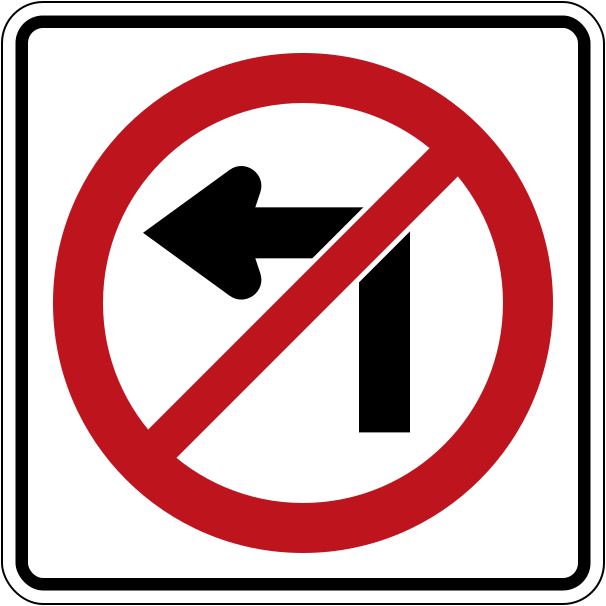
What does this sign mean?
- A.Left turns only
- B.You must not turn left hereAnswer
- C.Left turns are allowed after a complete stop
- D.Left turns are banned for trucks only
Explanation: A red circle with a diagonal red bar on a white square prohibits whatever is shown inside it. Here, left turns are not allowed; continue and find a legal route instead.
14 of 25 · Regulatory signs
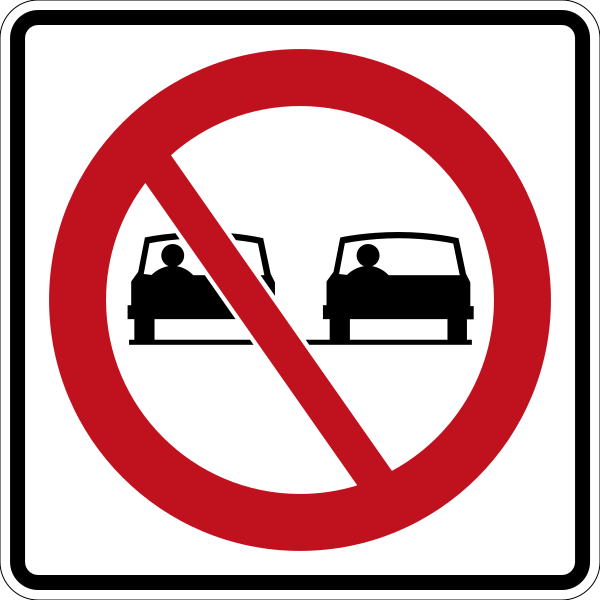
You see this sign on a two-lane highway. What does it mean?
- A.Passing is permitted again
- B.Pass only on the right
- C.Do not pass other vehicles on this stretch of roadAnswer
- D.Pass only vehicles going below the speed limit
Explanation: The do-not-pass sign prohibits passing along this section of road, usually because you cannot see far enough ahead. A passing-permitted sign marks where you may pass again; wait for it, and for a safe gap.
15 of 25 · Regulatory signs
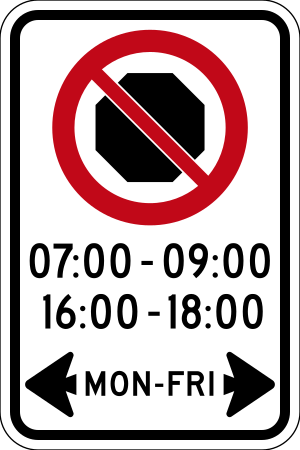
During the days and times shown, what does this sign prohibit?
- A.Parking only; brief stops to drop someone off are allowed
- B.Stopping only by commercial vehicles
- C.U-turns
- D.Stopping your vehicle there at all, even brieflyAnswer
Explanation: A no-stopping sign is stricter than a no-parking sign: during the days and times shown you may not stop there at all. Arrows on the sign show the stretch of curb the rule covers.
16 of 25 · Regulatory signs
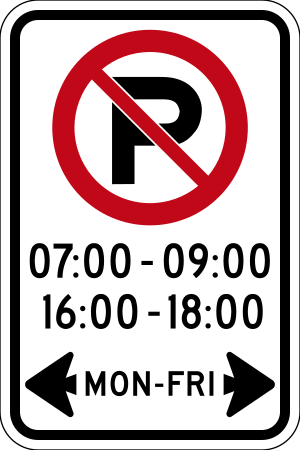
What does the arrow under the symbol on this sign show?
- A.Where the restriction appliesAnswer
- B.The direction traffic must travel
- C.Where the nearest legal parking is
Explanation: On parking and stopping signs, the arrow under the symbol shows where the action on the sign is not permitted. Read it before you park: the curb on the other side of the sign may follow a different rule.
17 of 25 · Regulatory signs
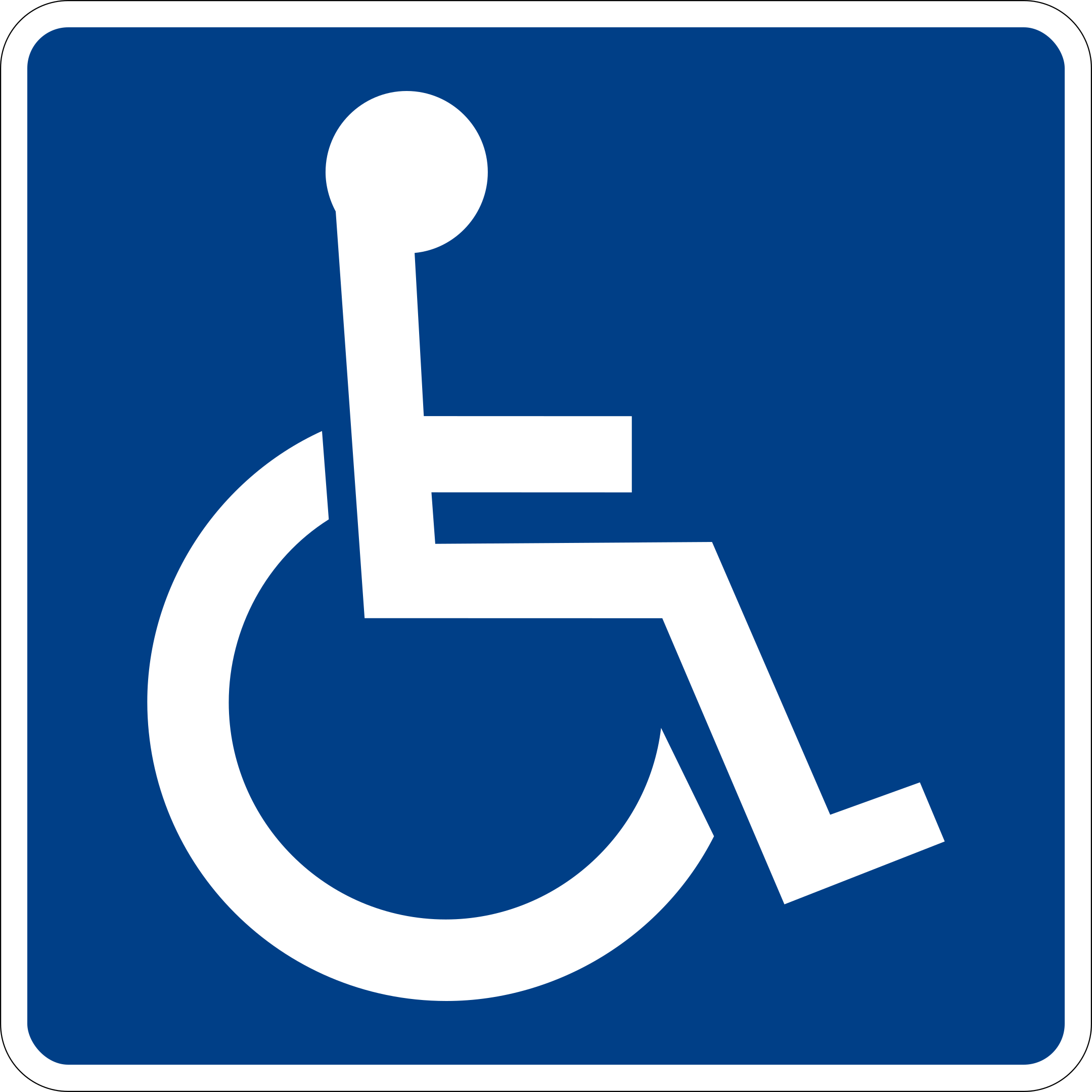
When may a vehicle park or stop in a stall marked with this sign?
- A.For up to 5 minutes with the hazard lights on
- B.Only when it displays an identifying placard or licence plate for persons with disabilitiesAnswer
- C.Whenever the rest of the lot is full
- D.When a passenger stays in the vehicle
Explanation: Stalls for persons with disabilities give them safe access to goods and services. It is illegal for any vehicle to park or even stop in one unless it has an identifying parking placard or licence plate.
18 of 25 · Regulatory signs
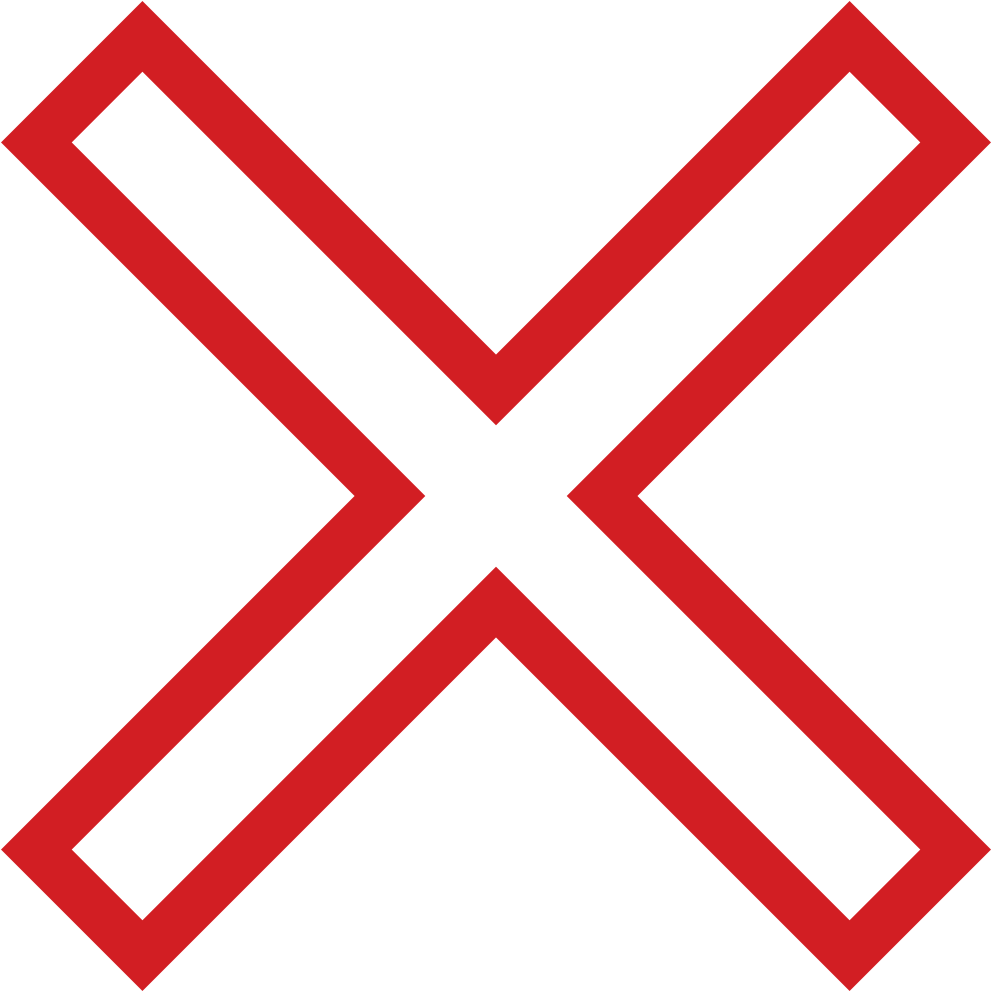
What does this sign at a railway crossing require of drivers?
- A.Stop only if the gates are down
- B.Cross quickly before a train arrives
- C.Yield only to trains on the nearest track
- D.Yield to all trainsAnswer
Explanation: This sign is posted at every public railway crossing, and it means trains always have the right-of-way. Where there is more than one track, the sign shows how many, and a train may come on any of them.
19 of 25 · Regulatory signs
Unless other times are posted beneath the sign, when is a school zone like this one in effect?
- A.School days only: 8:00 a.m. – 9:30 a.m., 11:30 a.m. – 1:30 p.m. and 3:00 p.m. – 4:30 p.m.Answer
- B.Every day, 7:00 a.m. to 6:00 p.m.
- C.School days only, 8:30 a.m. until 1 hour after sunset
- D.Only when children can be seen near the road
Explanation: School zones apply on school days only, in three periods: 8:00 a.m. – 9:30 a.m., 11:30 a.m. – 1:30 p.m. and 3:00 p.m. – 4:30 p.m. A municipality may set other hours by bylaw; if it does, they are posted beneath the school sign.
20 of 25 · Regulatory signs
While an Alberta school zone is in effect, what is its speed limit unless a different speed is posted?
- A.20 km/h
- B.30 km/hAnswer
- C.40 km/h
- D.50 km/h
Explanation: The school zone limit is 30 km/h in both urban and rural areas unless a different speed is posted. Exceeding the posted speed can lead to penalties under the Traffic Safety Act.
21 of 25 · Regulatory signs
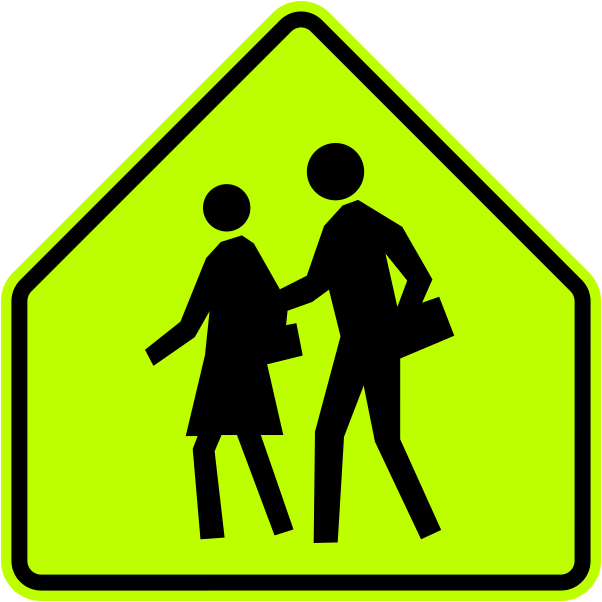
This school sign has no speed sign attached to it. What does it mean?
- A.You are entering a school zone with a 30 km/h limit
- B.Only school buses may use this road
- C.You are entering a school area: drive with caution, as children may be walking or crossingAnswer
Explanation: A school sign without a speed sign marks a school area, not a school zone. It carries no special speed limit, but it warns that children may be walking along or crossing the road, so use caution. Only a school sign with a maximum speed posted creates a school zone.
22 of 25 · Regulatory signs
Where does a school zone end?
- A.At the far edge of the school property
- B.Where a sign shows a higher maximum speed or the end of the school zoneAnswer
- C.100 metres after the school entrance
- D.At the next intersection
Explanation: A school zone continues until a traffic sign shows either a higher maximum speed or the end of the school zone. Keep to the school zone speed until you pass one of those signs; playground zones end the same way.
23 of 25 · Regulatory signs
Unless other times are posted, when do the restrictions of a playground zone like this one apply?
- A.School days only, 8:00 a.m. to 4:30 p.m.
- B.Weekends only, 9:00 a.m. to 9:00 p.m.
- C.Only from sunrise to sunset in summer
- D.Every day, from 8:30 a.m. until 1 hour after sunsetAnswer
Explanation: Playground zones apply every day, weekends and school holidays included, from 8:30 a.m. until 1 hour after sunset. A municipality may set other hours by bylaw, and they are then posted beneath the playground sign.
24 of 25 · Regulatory signs
While this playground zone is in effect, what is the rule about passing?
- A.You may pass if you stay under 30 km/h
- B.You must not pass, or try to pass, a vehicle travelling in the same directionAnswer
- C.You may pass if no children are in sight
Explanation: In a playground zone, as in a school zone, passing or attempting to pass a vehicle going the same way is prohibited while the restriction is in effect. A child stepping out in front of the vehicle you are passing would be hidden from you until the last moment.
25 of 25 · Regulatory signs
What does a sign with a fluorescent yellow-green background and a pentagon shape indicate?
- A.Construction ahead
- B.Distance to a destination
- C.Services such as fuel and food
- D.A school zone or school areaAnswer
Explanation: The fluorescent yellow-green pentagon is reserved for schools. With a maximum speed posted beneath it, it marks a school zone; on its own, it marks a school area where children may be walking or crossing.