1.Pedestrians
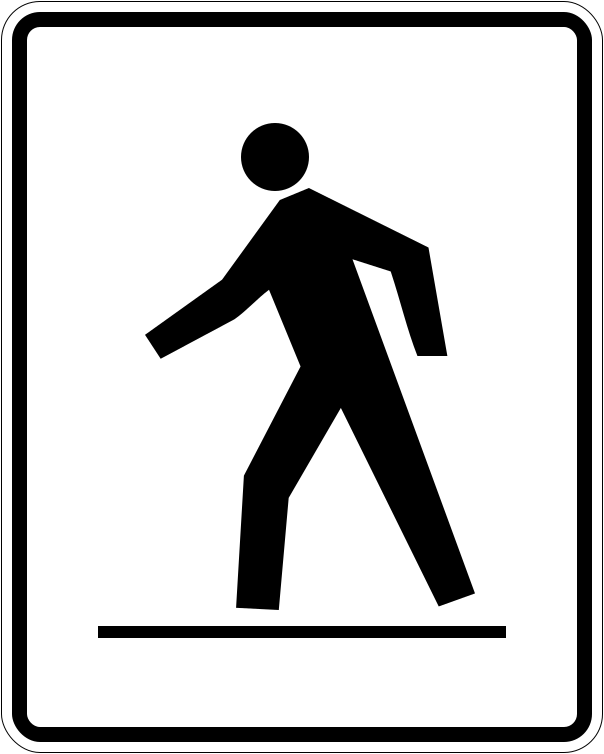
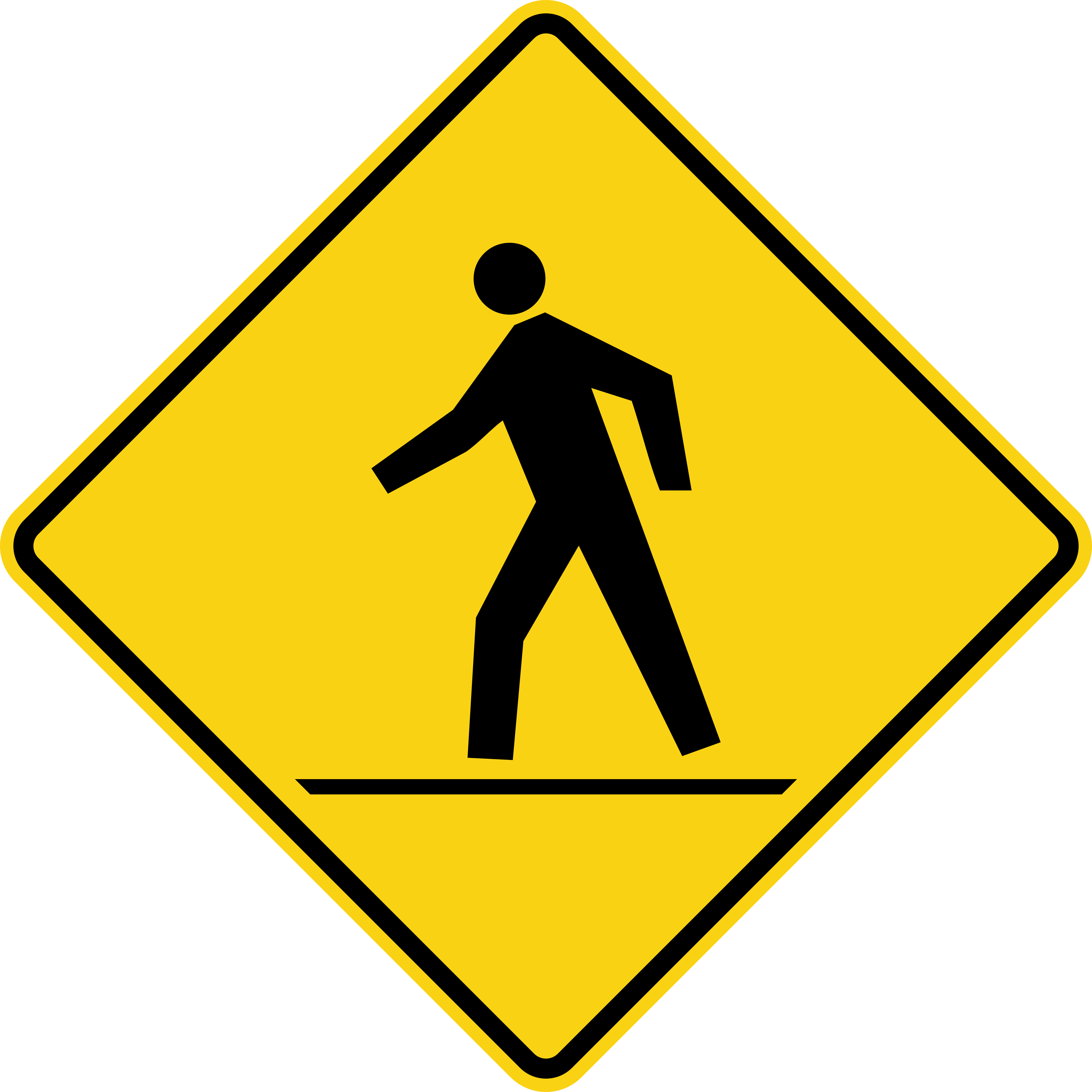
- At a yellow flashing pedestrian-activated light, slow to 30 km/h and yield to pedestrians who want to cross.
- In an urban area a pedestrian may signal the intention to cross by raising an arm at a right angle and pointing to the opposite curb. When they do, stop safely before the crosswalk and let them cross.
- Once a pedestrian has entered a crosswalk, marked or unmarked, you must yield. Stop about 2 to 3 car lengths back so drivers in other lanes can see the pedestrian and have time to stop.
- Never pass another vehicle as you approach a crosswalk: it may be slowing or stopping for a pedestrian you cannot see. Not every crosswalk is marked, so apply these rules at every intersection.
- Be considerate of pedestrians with a visual impairment; some carry a white cane or use a guide dog.
- After dark, pedestrians are hard to see, especially in dark clothing. Do not overdrive your headlights: drive so you can stop within the distance your headlights clearly light.
- Children can be unpredictable. In residential areas, glance under parked vehicles on both sides of the road for children's feet, toys and bicycle wheels — a sign you may need to stop.
Signs in this section

Official source: Sharing the road ↗
2.Cyclists
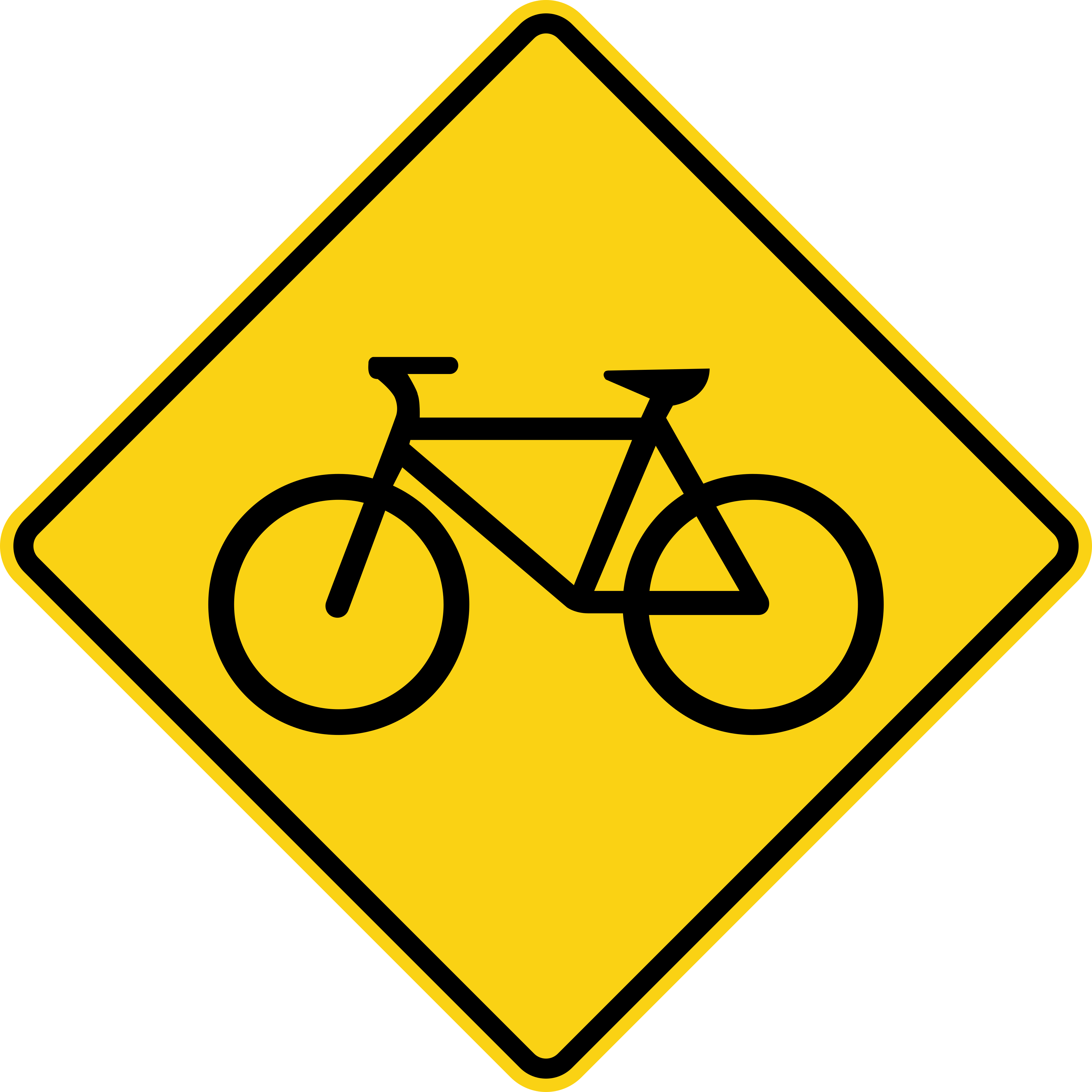
- The law requires cyclists and bicycle passengers under 18 to wear an approved bicycle safety helmet.
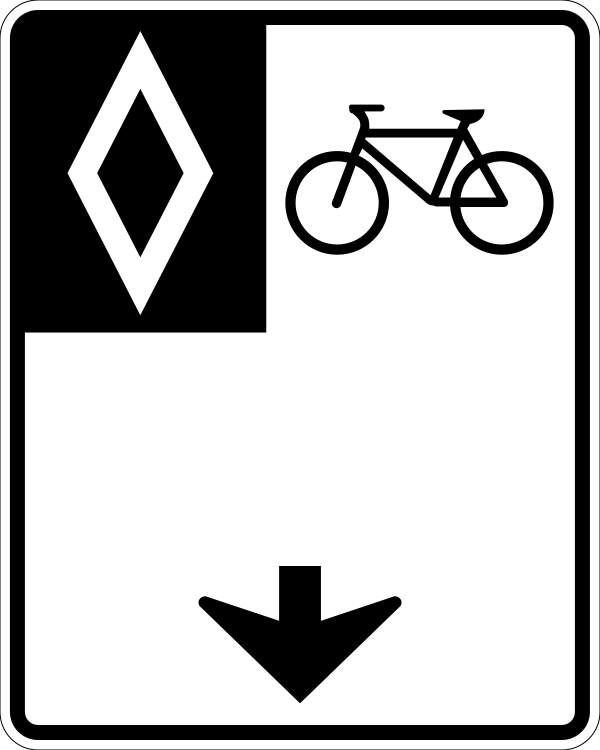
- A bicycle being ridden is a vehicle, and its rider follows the rules of the road like any driver. A cyclist walking beside and pushing a bicycle is a pedestrian.
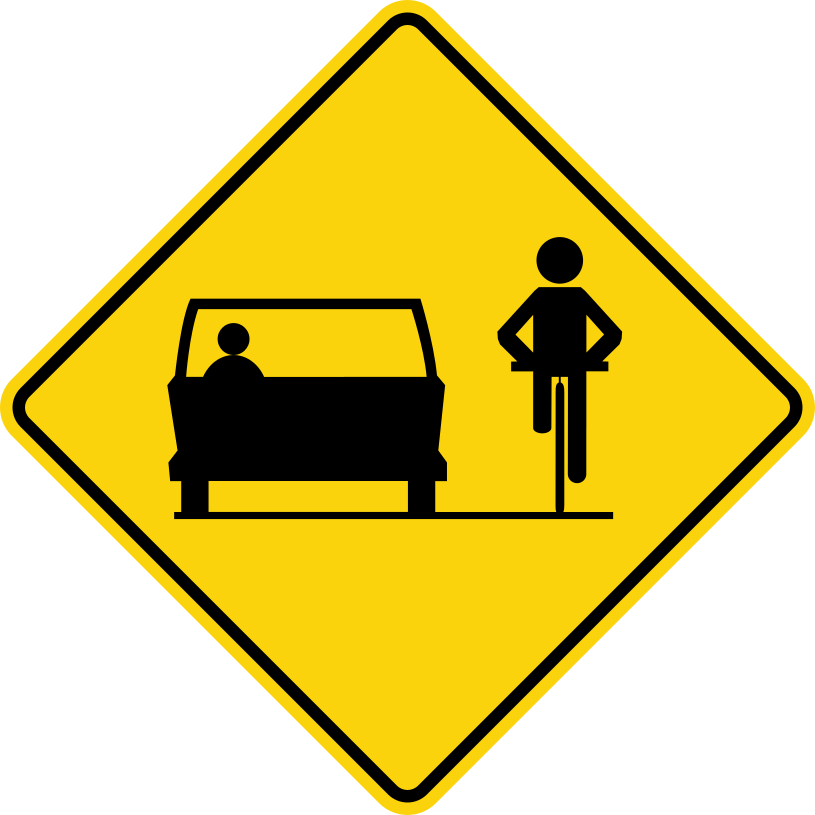
- Cyclists must ride as close as practicable to the right curb, but they may need to move out to avoid drainage grates, potholes, debris, gravel or slippery surfaces.
- To pass a cyclist, change lanes just as you would to pass any other vehicle.
- Before a right turn, watch for cyclists riding alongside you and shoulder check your blind spot to the right.
- When parked at the curb, check for cyclists before opening your door and before pulling away; waiting until it is safe to open the door is the driver's responsibility.
- Do not follow cyclists closely: bicycles have no brake lights to warn you that they are stopping.
Signs in this section
Official source: Sharing the road ↗
3.Motorcycles, commercial vehicles and log haulers
- Motorcycle riders often ride in the left part of their lane to be more visible. It does not mean they are about to turn left.
- Never share a lane with a motorcycle — the rider needs the whole lane — and leave extra following space, because motorcycles can stop very quickly.
- Before turning left, look carefully for oncoming motorcycles: they are hard to see in heavy traffic, at night or at dusk, and their speed is hard to judge.
- Large vehicles have larger blind spots. If you are behind one and cannot see both of its side mirrors, you are too close; if you can see the driver in a side mirror, the driver can see you.
- Heavy vehicles need extra distance to stop. Never cut into the space in front of one approaching a traffic light, and after passing one leave extra room before moving back in front of it.
- A large vehicle turning right needs extra room: stay well back and never drive into the space on its right, or you could be squeezed against the curb.
- The logs on a loaded log hauler may extend up to 9 metres behind the truck and can block some or all lanes when it turns. Never pass a log hauler that is turning off the highway.
Official source: Sharing the road ↗
4.School buses
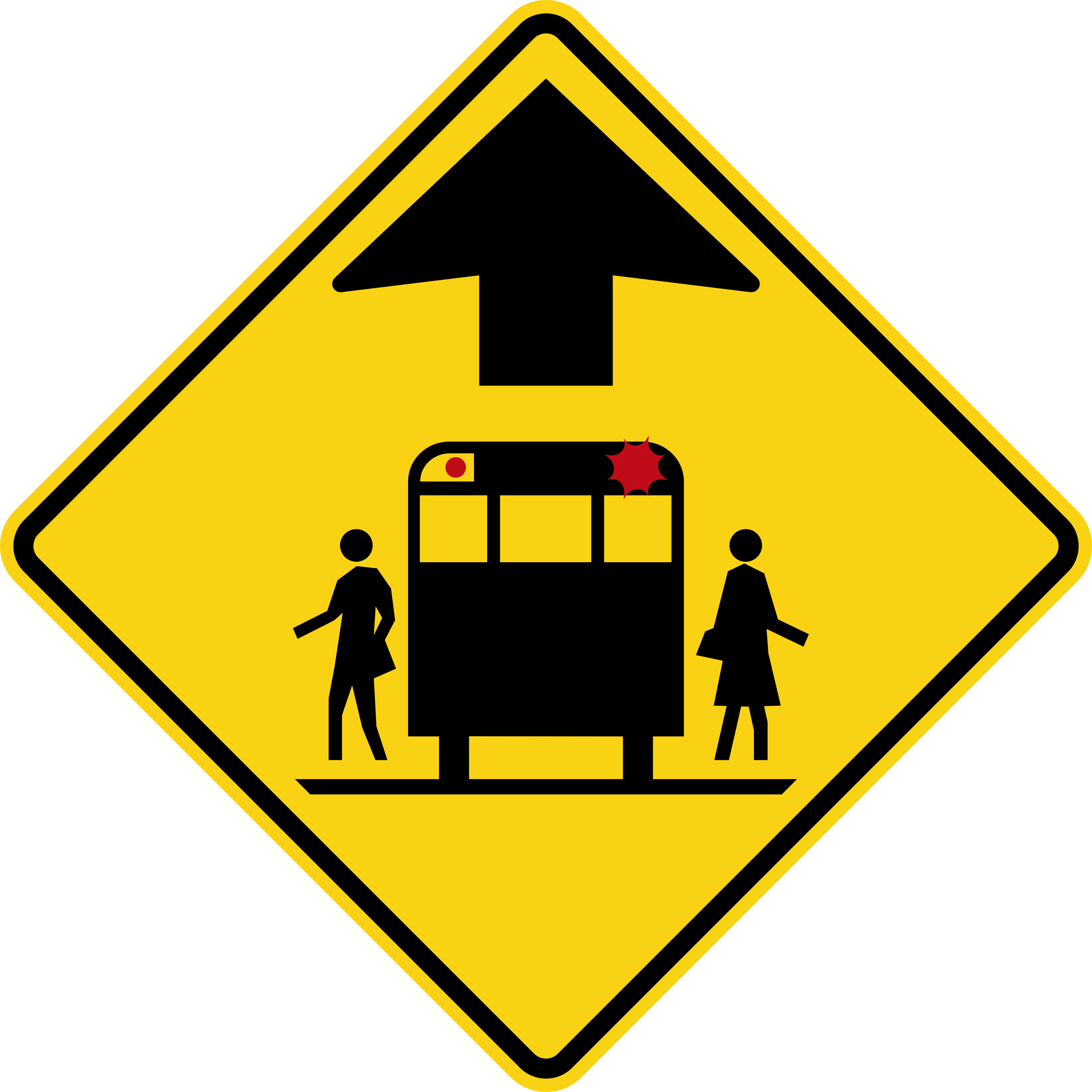
- Alternating amber lights are a warning: the bus is about to stop and its red lights will begin flashing. Whether you are behind the bus or facing it, be ready to stop.
- When the alternating red lights flash and the stop sign swings out from the left side of the bus, come to a full stop about 20 metres (about 4 to 5 car lengths) away, so drivers behind you can see the lights and the students crossing.
- On an undivided highway, traffic in both directions stops — on a 4-lane undivided highway, all 4 lanes stop.
- On a highway divided by a median, only vehicles behind the bus must stop. Oncoming traffic may proceed with caution, watching for pedestrians.
- Stay stopped until the red lights are turned off and the stop sign on the driver's side is no longer extended. These rules apply whenever and wherever the bus lights are on.
- Failing to stop for a school bus costs 6 demerit points.
| Road | Bus lights | Behind the bus | Facing the bus |
|---|---|---|---|
| Undivided | Alternating amber | Be ready to stop | Be ready to stop |
| Undivided | Alternating red, stop sign out | Stop about 20 metres away | Stop about 20 metres away |
| Divided by a median | Alternating amber | Be ready to stop | Proceed with caution |
| Divided by a median | Alternating red, stop sign out | Stop about 20 metres away | Proceed with caution; watch for pedestrians |
Signs in this section
Official source: Sharing the road ↗ · Driving within the law ↗
5.Railway crossings and vehicles that must stop at them
- Never try to outrace a train. Even under full emergency braking, a train may need a kilometre or more to stop.
- Where an X or a stop line is painted on the approach, stop before the stop line if you must stop for a train.
- Do not get trapped on the tracks: wait on the approach and cross only when you are sure you can clear the crossing.
- When the last car of a train has passed, make sure no second train is coming on another track before you move — the noise of the first train can hide it.
- With a manual transmission, do not change gears on the tracks. If your vehicle stalls on a crossing, get everyone out and away at once; if a train is coming, move toward the direction it is coming from to avoid flying debris.
- Commercial vehicles carrying passengers or dangerous goods can be required by law or company policy to stop at railway crossings, so be ready to stop when following one. A school bus or a vehicle carrying explosives, gas or flammable liquids that fails to stop earns 5 demerit points.
| Warning device | What you must do |
|---|---|
| Advance warning sign | Look, listen and slow down — you may have to stop. A speed sign beneath it gives the recommended crossing speed, lower than the posted limit. |
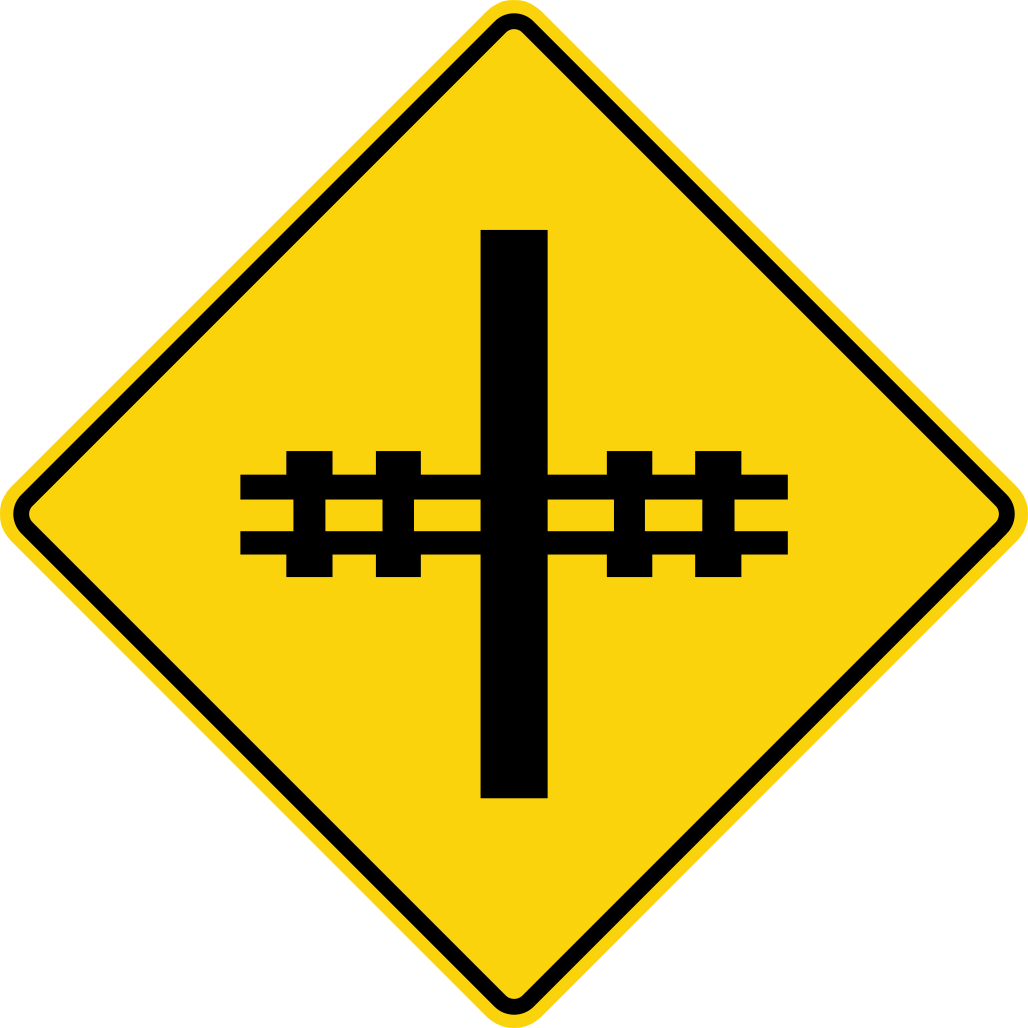
| Railway crossing sign | Posted at every public crossing; yield to all trains. It shows the number of tracks if there is more than one. Stop when a train is visible or sounding a signal and is within 500 metres (about 5 city blocks). |
| Crossing sign with a stop sign | Come to a complete stop between 5 metres and 15 metres from the nearest rail, and go only when you are sure no train is approaching. |
| Flashing red lights and bell | Stop; the vehicle nearest the crossing stops at least 5 metres back from the nearest rail. Wait until the lights and bells stop and the train has passed or stopped, and check that every track is clear. |
| Gates with lights and bells | Stay stopped until the gates are raised, the lights stop flashing and the bells stop ringing. Never drive around a gate that is down, rising or lowering. |
Signs in this section

Official source: Sharing the road ↗ · Driving within the law ↗
6.Emergency vehicles and tow trucks
- When an ambulance, fire or police vehicle sounding a siren approaches from any direction, yield: pull as close as possible to the right curb or edge of a two-way road, or to the nearest curb on a one-way street.
- Stop until the emergency vehicle has passed, then check that no other emergency vehicles are coming before you move on.
- Treat a vehicle with flashing green lights like any other emergency vehicle: in some municipalities volunteer fire fighters use them when responding.
- Always yield to an emergency vehicle with its siren or lights on, and stay at least 150 metres behind it.
- When passing emergency vehicles or tow trucks stopped with their lights flashing, slow to 60 km/h or the posted speed, whichever is lower. The rule applies in the lane or lanes immediately next to the stopped vehicles.
- The fine for speeding past stopped emergency vehicles and tow trucks is doubled.
- Even if you are not in the lane next to them, slow down, leave plenty of space, watch for people moving around the scene, and follow the directions of emergency personnel.
Official source: Emergency situations ↗
7.Snowplows, road crews and slow-moving vehicles
- Flashing amber and red lights mean "snowplow ahead". Keep a safe following distance — many maintenance vehicles show the minimum on a rear sign — to gain reaction time and avoid rock damage from the sander.
- Passing a snowplow is strictly prohibited when the view along its side is blocked, when passing would get in the way of its work, or when the pass cannot be made safely.
- Plow operators pull over where it is safe every 5 to 8 kilometres to let traffic by. Even where passing is allowed, it is safer to stay well back until then.
- A plow can raise a snow cloud. When one approaches from the other direction, watch your lane closely: a vehicle passing the plow may be coming at you in your lane.
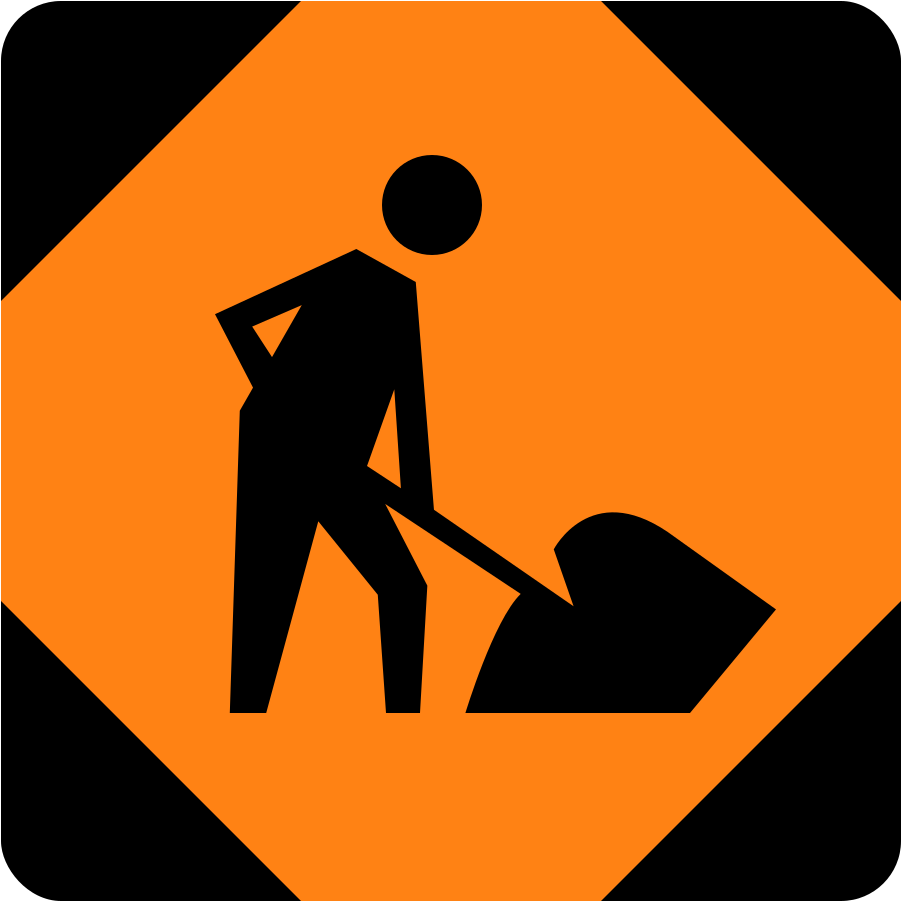
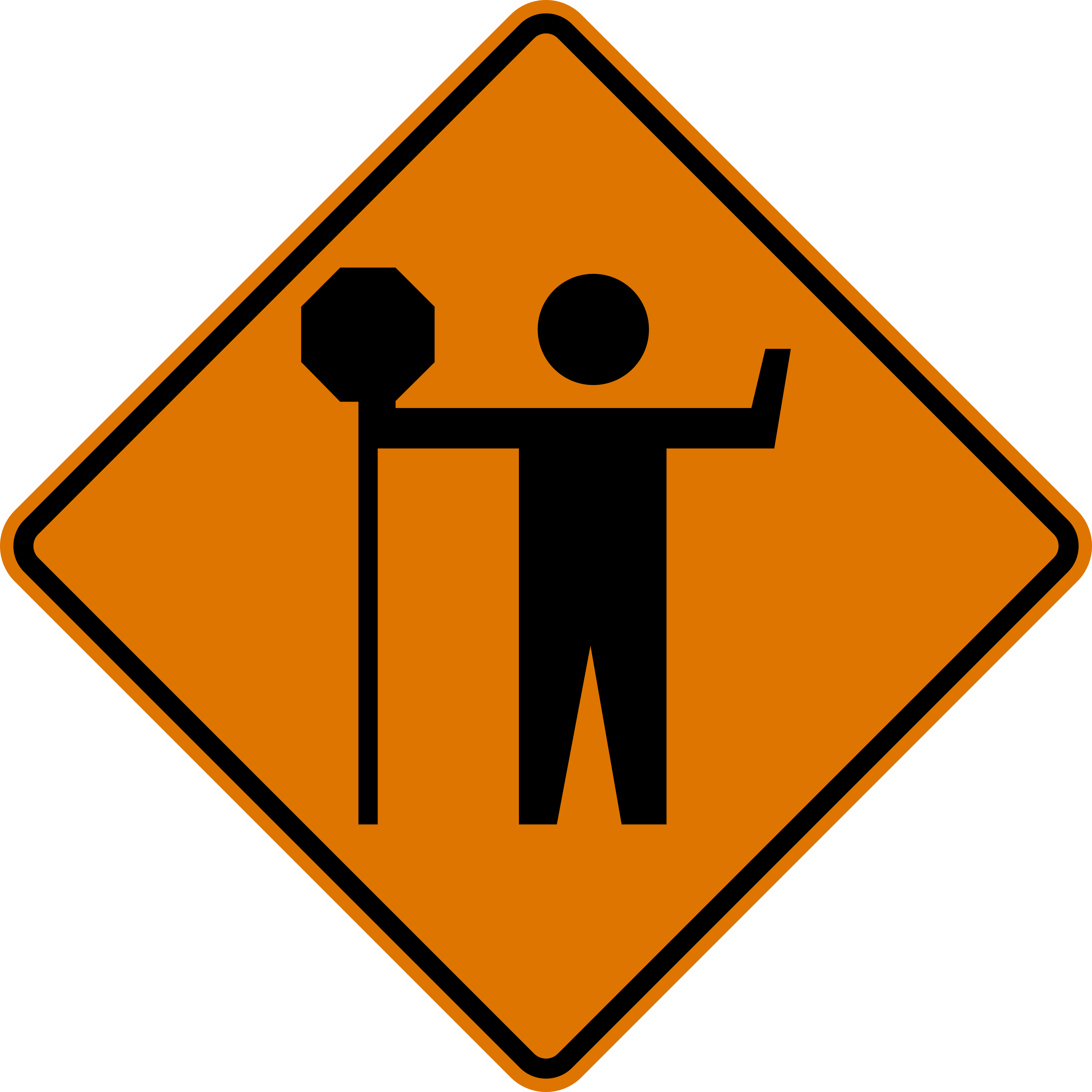
- Road maintenance and construction vehicles may be working or parked on any part of the road. Obey every traffic control device and the directions of flag persons.
- The construction-zone speed limit applies at all times, even when no one is working, because bumps, fresh oil or loose gravel may remain. When workers are present, speeding fines are doubled.
- A slow-moving vehicle sign marks vehicles that travel at less than 40 km/h, such as farm tractors, machinery or construction equipment. Be prepared to slow down.
Signs in this section
Official source: Sharing the road ↗ · Emergency situations ↗ · Traffic control ↗
8.Light rail transit, funeral processions, off-highway vehicles and animals
- Light rail transit (LRT) crossings in Calgary and Edmonton work like other railway crossings. LRT trains run on electricity and are very quiet, and every warning device there — signals, signs, bells or gates — means stop and do not cross.
- Never drive around LRT gates, even right after a train has passed: another may be coming the other way. An LRT train may need up to 100 metres to stop in an emergency.
- Do not pass through a funeral procession. Yield the right-of-way until it has passed.
- Watch for off-highway vehicles such as all-terrain vehicles and snowmobiles, which may be near the highway or trying to cross it.
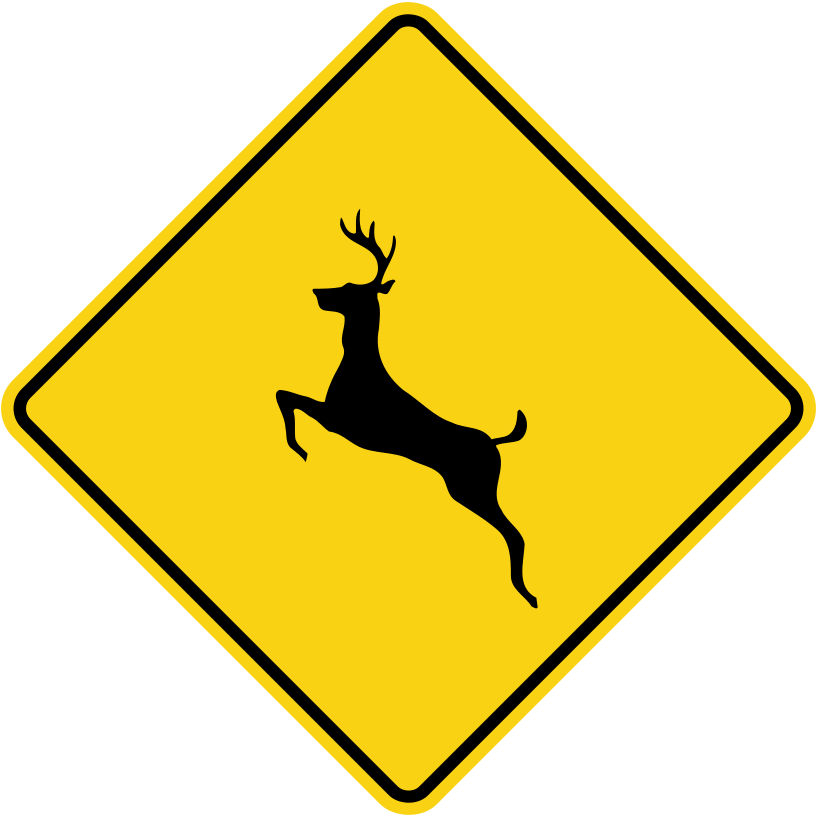
- To avoid hitting an animal, slow down and look well ahead where wildlife warning signs are posted, scan the sides of the road, and take extra care at dusk and dawn, when animals are most active.
- At night, sudden unusual spots of light near the road may be your headlights reflecting from an animal's eyes. Animals often move in groups: if you see one, expect more.
- If an animal suddenly appears in front of you, brake hard and be ready to take evasive action, choosing an escape route away from oncoming traffic.
Signs in this section
Official source: Sharing the road ↗ · Emergency situations ↗